During facility tours, PE technical advisors look for what's visible: equipment condition, facility cleanliness, staff professionalism. What they should also look for: data maturity.
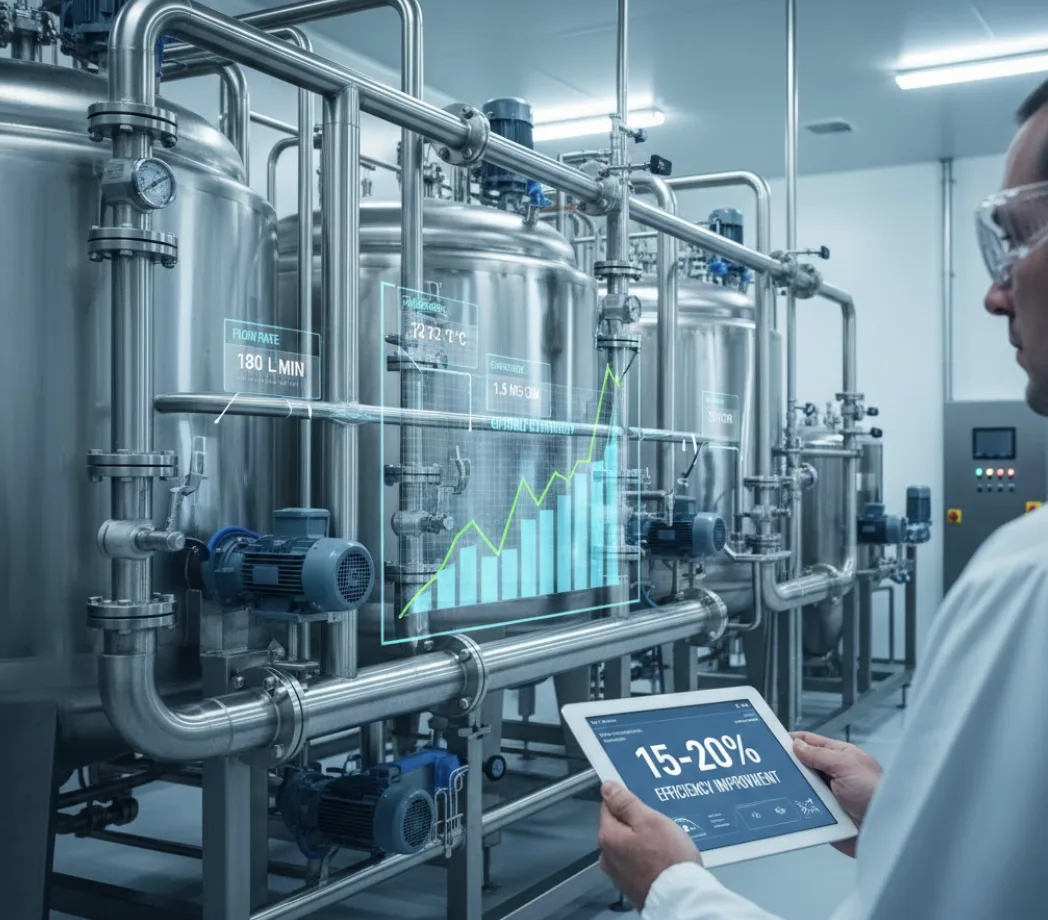
CIP system data tells a story about operational discipline. High-maturity CIP systems log every cycle automatically—start time, end time, temperature, chemical concentration, flow rate, discharge pressure. The system adjusts parameters in real-time if conditions drift. Low-maturity systems run on timers. Start the 45-minute cycle. Hope it works. Move on.
The difference between these two systems is profound, and it's invisible unless you know what to look for.
What High-Maturity CIP Data Looks Like
A modern CIP system logs:
- Temperature profiles (confirming setpoint achievement)
- Chemical conductivity (verifying proper concentration)
- Flow rates (identifying blockages or pump degradation)
- Cycle duration (tracking parameter drift)
- Manual adjustments (flagging when operators override controls)
These data points roll into dashboards. Operators see alerts when performance drifts. Management sees trend reports showing equipment degradation before failures happen. This is operational maturity.
What Low-Maturity CIP Data Looks Like
Manual logging. Time-based cycles. No feedback loops. Operators run the same cleaning sequence every day regardless of conditions. Equipment performance drifts slowly. Cycle times extend. Chemical consumption increases. Nobody notices until a critical failure forces investigation.
Why PE Firms Should Care
CIP data maturity is a leading indicator of broader operational maturity. If a plant has invested in automated CIP monitoring with real-time data capture, they've also invested in:
- Process control discipline
- Preventive equipment maintenance
- Staff training in process optimization
- Systematic problem-solving approaches
Conversely, if a plant is running CIP systems without data capture, those gaps typically extend throughout the operation. Equipment maintenance is reactive, not preventive. Process optimization is guesswork. Staff training is inconsistent.
The Due Diligence Signal
During site visits, ask the plant manager: "Show me your last 30 days of CIP cycle data." Their response tells you everything.
High-maturity answer: Pulls up a dashboard showing automated logs, trend analysis, and alert patterns. Can explain specific decisions based on data.
Low-maturity answer: "We don't track that. The system runs on timer." This signals that operational improvement potential is substantial—but also that hidden operational issues are probable.
Hidden Opportunity and Hidden Risk
High CIP data maturity suggests:
- Lower risk of hidden operational problems
- Higher cost of further optimization (already optimized)
- Faster integration post-close (systems are already disciplined)
Low CIP data maturity suggests:
- Substantial hidden operational improvement potential
- Higher risk of discovering problems post-close
- Longer integration timeline (systems need discipline building)
For PE firms evaluating food manufacturing targets, CIP data maturity is a simple but powerful due diligence signal. It requires only 10 minutes of a facility tour, but reveals critical information about operational culture and hidden risk.