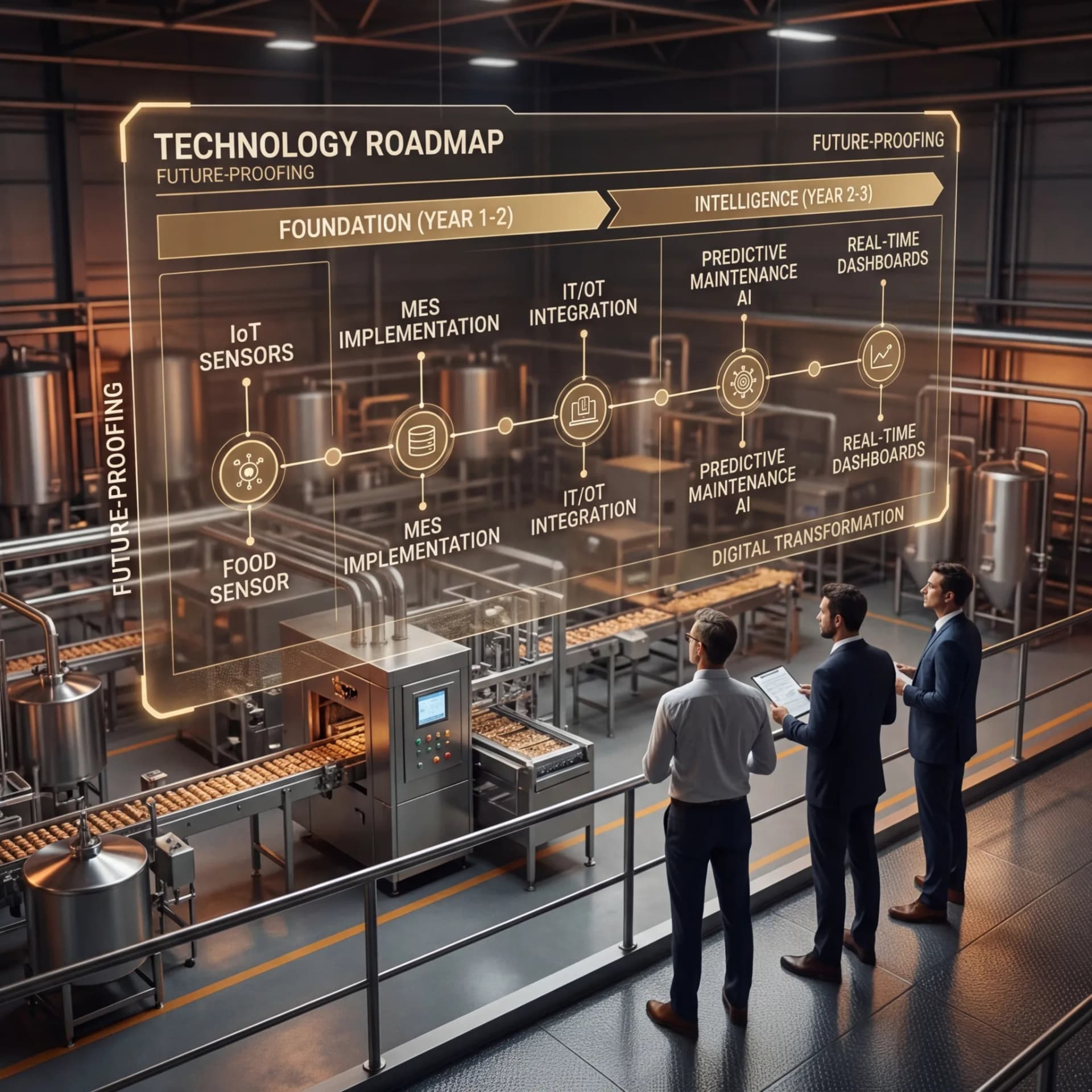
A food manufacturer operates with basic production systems: Manual quality inspections, spreadsheet-based scheduling, limited data visibility. The competitor, same size, uses AI-powered predictive maintenance, automated quality systems, real-time dashboards.
Result: Competitor achieves 4% higher OEE, 2% lower quality costs, 30% faster decision-making.
Digital transformation isn't luxury -- it's competitive necessity.
The Digital Transformation Framework
Phase 1: Foundation (Year 1-2) Build data infrastructure enabling later advances:
-
Equipment Connectivity: Install IoT sensors on critical equipment
- Capture production parameters (temperature, speed, flow)
- Enable real-time monitoring
- Cost: $200K-$500K
-
Data Systems: Implement MES (Manufacturing Execution System)
- Centralize production data
- Enable real-time dashboards
- Cost: $300K-$600K
-
IT/OT Integration: Secure network connecting operational technology
- Safe data flow from plant floor to systems
- Security frameworks
- Cost: $100K-$200K
Phase 2: Intelligence (Year 2-3) Layer analytics and AI on data foundation:
-
Predictive Maintenance: ML models predicting equipment failures
- Maintenance before failure (vs. reactive)
- 15-30% reduction in downtime
- Cost: $100K-$300K
-
Quality Automation: AI-powered quality inspection
- Computer vision analyzing product quality
- Faster, more consistent than manual inspection
- Cost: $200K-$500K
-
Demand Planning: Predictive analytics forecasting demand
- Better inventory management
- Improved working capital
- Cost: $50K-$150K
Phase 3: Optimization (Year 3+) Use intelligence to drive continuous improvement:
-
Dynamic Scheduling: AI optimizing production schedule
- Minimize changeovers, maximize efficiency
- Cost: $100K-$200K
-
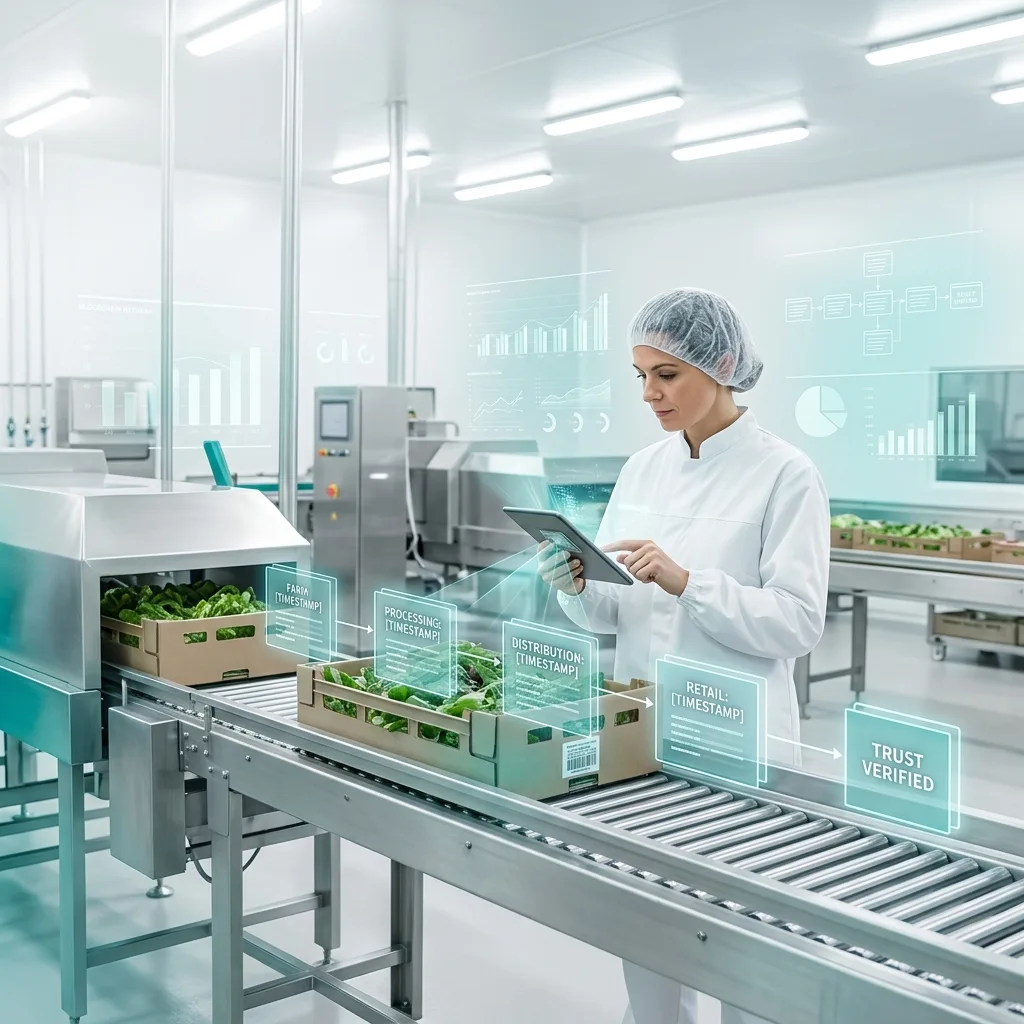
Supply Chain Visibility: End-to-end traceability
- Track ingredients from supplier through customer
- Enables rapid recall if needed
- Cost: $150K-$300K
Implementation Roadmap Example
| Phase | Year | Investment | Key Initiatives |
|---|---|---|---|
| Foundation | 1 | $600K | IoT sensors, MES, IT/OT security |
| Intelligence | 2 | $500K | Predictive maintenance, quality automation |
| Optimization | 3 | $300K | Dynamic scheduling, supply chain visibility |
Total 3-year investment: $1.4M
ROI Analysis (Year 3+):
- Downtime reduction: -$300K annually
- Quality cost reduction: -$200K annually
- Labor efficiency: -$100K annually
- Working capital improvement: -$200K
- Total annual benefit: $800K
- Payback: 1.75 years
Critical Success Factors
- Executive Sponsorship: CEO/COO must champion transformation
- Change Management: Train teams, manage resistance to change
- Data Governance: Establish clear data ownership and access rules
- Vendor Selection: Partner with experienced technology providers
- Phased Approach: Build incrementally, realize benefits at each phase
2026 Digital Priorities
Based on food industry trends, highest-priority initiatives:
- AI-Ready Data Governance (foundation for all else)
- Predictive Maintenance (immediate ROI: 15%+ downtime reduction)
- Quality Automation (addresses labor shortage, improves consistency)
- End-to-End Traceability (regulatory requirement + customer demand)
- Demand Planning (improve working capital efficiency)
The Competitive Advantage
Digital-advanced competitors achieve:
- 5-10% higher operational efficiency
- 20-30% faster decision-making
- Superior quality consistency
- Better supply chain resilience
- Ability to respond to market changes faster
These operational advantages translate to margin improvement of 1-3 percentage points.
For food manufacturing companies, implementing phased digital transformation roadmap builds foundation for operational excellence while positioning for future innovation.