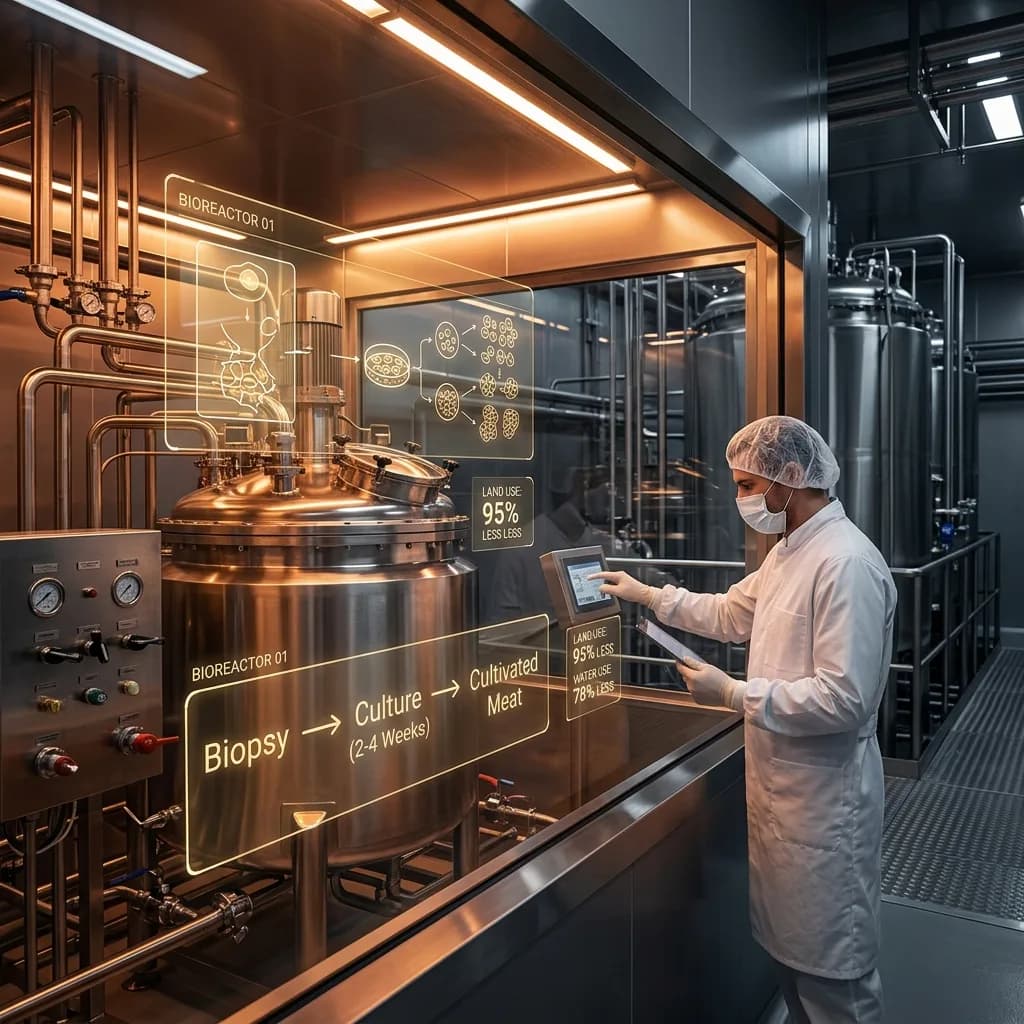
A food innovator sees unsustainability of conventional meat: Requires 2-3 years, massive land, water, feed inputs. Seeks alternative: Lab-grown meat (animal cells in bioreactor).
Result: Cells harvested painlessly, cultured 2-4 weeks. Growing muscle tissue in bioreactor. Meat product created without raising animals. Environmental impact: 95% less land, 78% less water, 96% less carbon. Sustainable protein revolution launched.
Cellular agriculture enables environmentally sustainable protein with ethical acceptance.
The Cellular Agriculture Framework
What is Cellular Agriculture?
Production of food from animal cells in bioreactors:
- No animal slaughter: Cells harvested non-invasively
- Controlled environment: Bioreactor replaces farm
- Speed: Weeks vs. years (cattle growth time)
- Sustainability: Minimal land, water, carbon footprint
Process Overview (Simplified):
| Stage | Description | Timeline |
|---|---|---|
| Biopsy | Extract muscle cells from animal | 1 time (painless) |
| Banking | Preserve cells (frozen storage) | Indefinite |
| Culture | Grow cells in nutrient medium | 1-2 weeks |
| Differentiation | Cells form muscle tissue | 2-3 weeks |
| Harvesting | Collect developed meat | Final stage |
| Processing | Format into product (ground, steak) | Post-harvest |
Detailed Process
Step 1: Cell Biopsy
Method: Small muscle biopsy (non-invasive)
- Source: Living animal (cattle, chicken, fish, etc.)
- Amount: Small tissue sample (few grams)
- Process: Like veterinary biopsy (painless)
- Outcome: Cell lines established, can last indefinitely
- Benefit: One animal can produce millions of servings
Step 2: Cell Banking and Proliferation
Purpose: Expand limited cells to production scale
Culture Medium (Growth Liquid):
Nutrient broth containing:
- Amino acids: Building blocks for proteins
- Glucose: Energy source (carbon)
- Growth factors: Chemical signals (insulin-like)
- Vitamins: Essential cofactors
- pH buffers: Maintain optimal pH
Growth Process:
- Plate cells on growth medium
- Cells divide (proliferation phase)
- Population doubles every 24-48 hours
- After 5-7 doublings: Million cells to Billion cells
- Scale: From dish to bioreactor
Step 3: Bioreactor Cultivation
Equipment: Stainless steel bioreactor (100-10,000 liter)
System Components:
- Stirring: Gentle mixing (prevents cell damage)
- Aeration: Oxygen delivery (cells are aerobic)
- Temperature: 37 degrees C (mammalian body temperature)
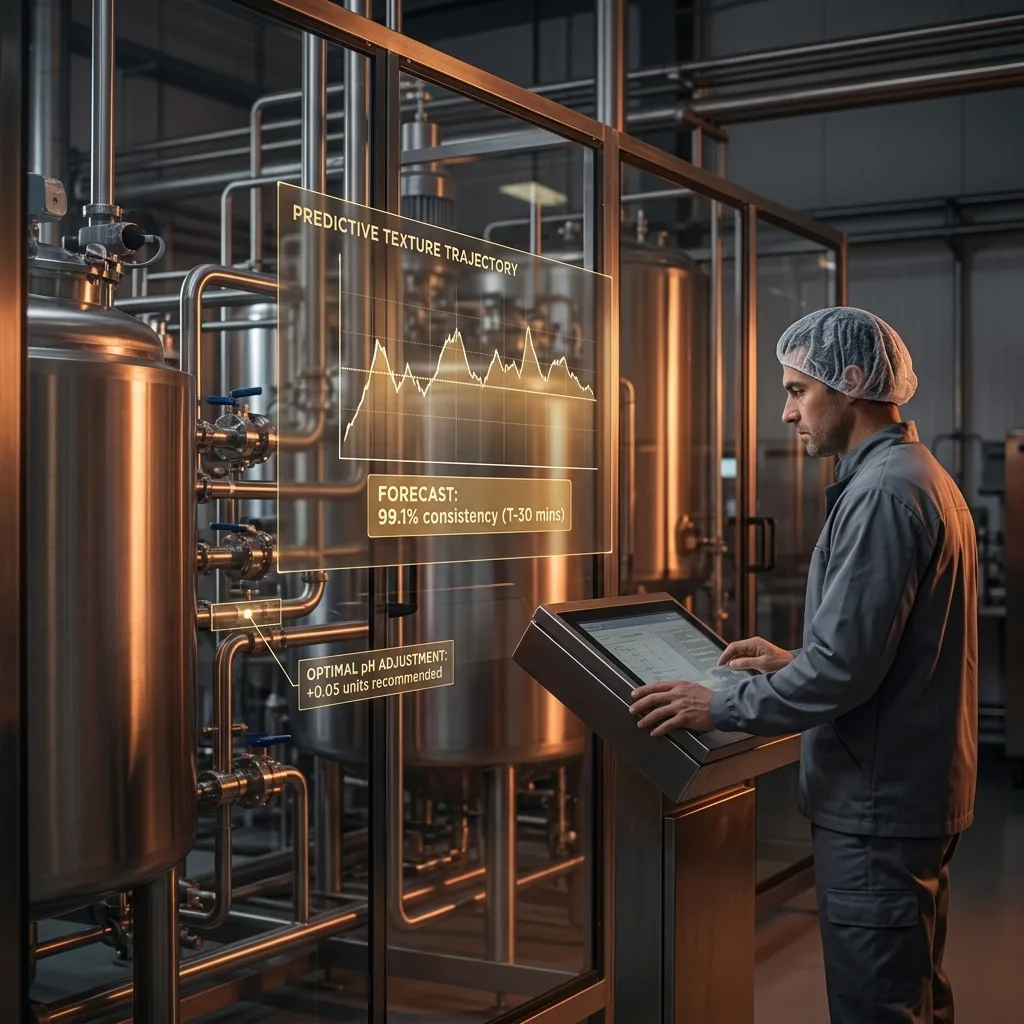
- pH monitoring: Automated adjustment
- Nutrient delivery: Continuous perfusion
- Waste removal: Remove lactate, ammonia (metabolic waste)
Process:
- Inoculate cells into bioreactor
- Culture 1-2 weeks (proliferation phase)
- Monitor: Cell density, viability, metabolic markers
- Target: 10 billion cells typical (per bioreactor)
- Yield: ~5-50 kg meat (depending on reactor size)
Step 4: Differentiation (Tissue Formation)
Purpose: Cells form organized muscle tissue
Scaffold Support:
- Substrate: 3D scaffold (provides structure)
- Material: Collagen, plant-based, synthetic
- Function: Cells attach, form tissue structure
- Result: Organized tissue (not just cell suspension)
Differentiation Signals:
- Mechanical stimulation: Mimics muscle contraction
- Electrical signals: Triggers muscle development
- Chemical factors: Growth hormones, myostatin inhibitors
- Result: Cells organize into muscle fiber structure
Timeline: 2-3 weeks (muscle tissue forms)
Environmental Advantages
Comparison to Beef Production:
| Metric | Beef (Conventional) | Lab-Grown | Reduction |
|---|---|---|---|
| Land use | ~25 m2 per kg | ~0.5 m2 per kg | 95% less |
| Water use | 15,000 L per kg | 3,000 L per kg | 78% less |
| Carbon emissions | 27 kg CO2e per kg | 1 kg CO2e per kg | 96% less |
| Growth time | 2-3 years | 4-6 weeks | 99% faster |
| Feed efficiency | 6:1 (feed:meat) | 1:1 (medium:meat) | 6x better |
Sustainability Benefit: Climate, land, water impact dramatically reduced
Market Status
Regulatory Approval:
- Singapore: First approval (2023, UPSIDE Foods)
- USA: FDA pathways active (approval expected 2024-2025)
- EU: Regulatory process ongoing
- Global: Rapid approval expansion anticipated
Commercial Reality:
- First products: Limited availability, premium pricing
- Cost: $100+/kg production (declining as scale increases)
- Timeline: 2024 - niche products, 2026+ - broader availability
Challenges:
- Cost: Still expensive vs. conventional meat
- Taste/Texture: Must match beef (improving rapidly)
- Regulatory: Varies globally (approval paths clear, but evolving)
- Consumer acceptance: Education needed, skepticism exists
- Scaling: Moving from lab to commercial production
Long-term Impact
Projected Market Share:
- 2025: under 1% of meat market (novelty)
- 2030: 5-10% (established category)
- 2040: 20-30% possible (mainstream)
- 2050: 50%+ possible (dominant if scaling succeeds)
Implications:
- Livestock farming: Potential 20-30% reduction in cattle/poultry
- Agricultural land: Could be repurposed for crops, rewilding
- Food security: Production independent of climate/disease
- Employment: Shift from farming to biomanufacturing
Cost-Benefit Analysis
| Factor | Impact |
|---|---|
| Bioreactor equipment | $5-50M (production scale) |
| Medium costs | $10-20/kg (currently) |
| Processing | Similar to conventional meat |
| Production cost | $50-100/kg (declining) |
| Retail price | $150-300/kg (premium, declining) |
| Environmental benefit | 95% land, 78% water, 96% carbon |
| Ethical benefit | No animal slaughter |
| Timeline to profitability | 5-10 years (cost reduction dependent) |
For food innovators, cellular agriculture represents future of sustainable protein production.