A facility operates with reactive quality control: Test products after production, identify failures, investigate root cause, implement fix.
This approach works, but it's expensive. Failed products already cost raw materials, labor, and processing. Detection and investigation add more cost. And if defects reach customers, recall costs explode.
Progressive food manufacturers use preventive controls—systems that stop defects before they occur.
The Quality Progression
Level 1: Reactive Testing (Lowest Maturity)
- In-process and final product testing
- Defects detected in finished goods
- Investigation and corrective action post-detection
- Typical defect escape rate: 2-5% (some failures reach customers)
- Cost: High (finished product waste + investigation + recalls)
Level 2: Process Monitoring (Intermediate Maturity)
- Real-time process monitoring (temperature, pressure, flow rates)
- Immediate alert when parameters drift
- Stop production before defects occur
- Typical defect escape rate: 0.5-1.5%
- Cost: Moderate (equipment investment + monitoring system)
Level 3: Preventive Controls (High Maturity)
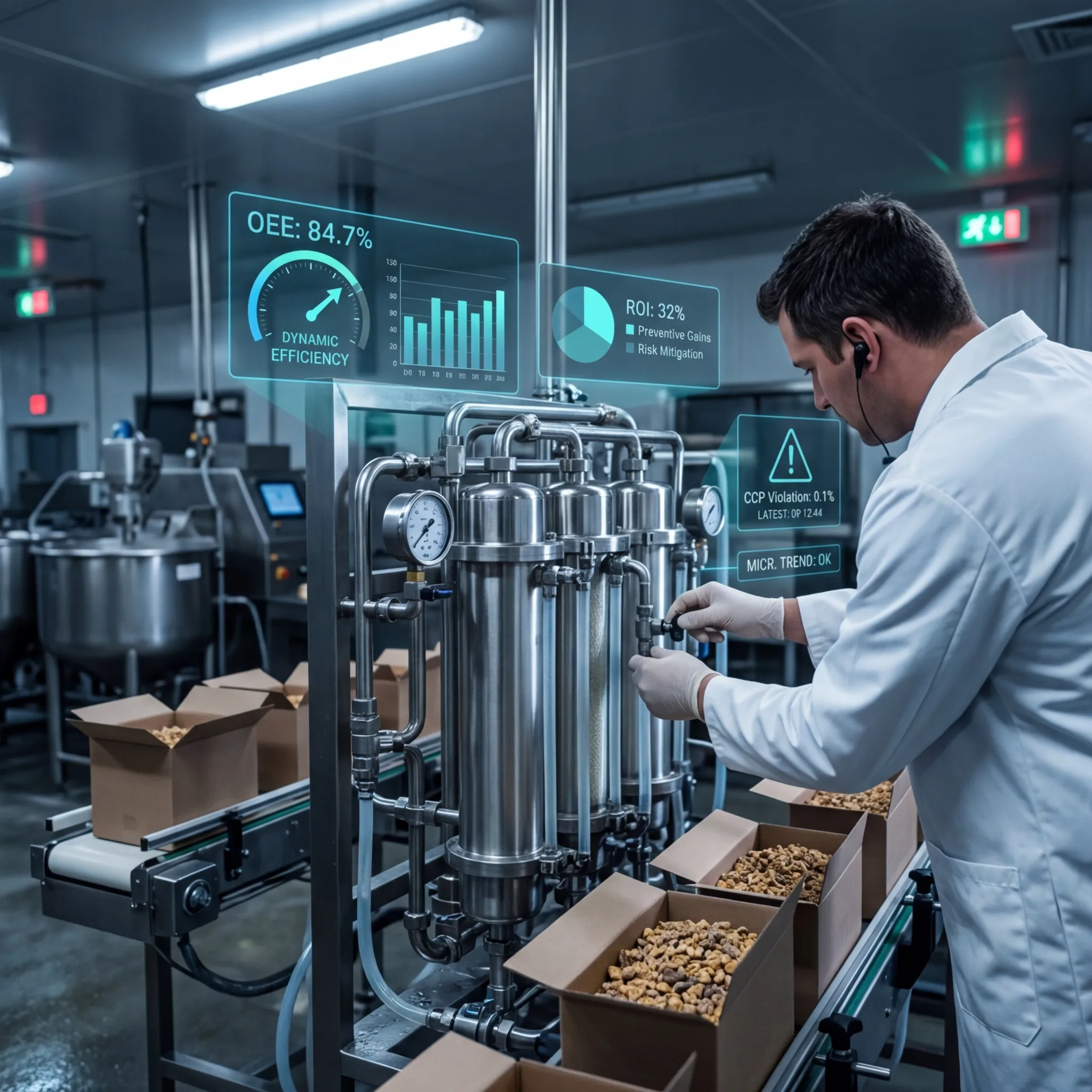
- Critical Control Points (CCPs) defined in production process
- Preventive measures established before production (incoming ingredient specs, equipment calibration, operator training)
- Real-time monitoring with automatic adjustments
- Regular audits and system validation
- Typical defect escape rate: Under 0.5%
- Cost: Lower (prevention cheaper than detection + correction)
The Preventive Controls Framework
For a dairy separator, preventive controls include:
Pre-Production (Incoming Controls):
- Milk quality specs verified (somatic cell count, antibiotic residues)
- Separator calibrated and documented
- Temperature sensors validated
In-Process Monitoring (Real-Time Controls):
- Continuous fat content monitoring
- Temperature maintained within +/-0.5 degrees C
- Centrifuge bowl speed monitored
- Automatic shutoff if parameters drift
Post-Production (Validation):
- Sensory evaluation (visual, smell, taste)
- Composition testing (sample per batch)
- Microbial testing (daily samples)
Documentation and Audits:
- Daily logs of all CCP monitoring
- Corrective action records
- Weekly review of process performance
- Annual system validation audit
The Economic Case
Compare annual costs for 10M unit/year facility:
Reactive Approach:
- Quality testing: $200K
- Defect escape (0.2% reach market): $100K (replacement + shipping)
- Potential recall: $500K annual risk
- Total: ~$350K-$800K annually
Preventive Controls Approach:
- Preventive systems investment: $150K upfront + $80K annual
- Monitoring equipment: $100K upfront + $30K annual
- Quality testing: $150K (less post-detection)
- Defect escape: $20K (0.02% rare escapes)
- Total: ~$260K annually (plus $250K upfront)
3-Year cost comparison:
- Reactive: $1.05M-$2.4M (three years)
- Preventive: $1.01M (three years, includes upfront)
Preventive controls break even in year 1-2 while improving customer satisfaction.
FDA/USDA Perspective
Modern food regulations expect preventive controls (FSMA in US, similar in EU). Facilities with documented preventive systems receive preferential treatment during inspections.
For food manufacturing companies, transitioning from reactive testing to preventive controls improves product quality, reduces defect costs, and demonstrates regulatory compliance maturity to PE investors.