A plant-based meat alternative company produces protein with poor texture (mushy, uniform consistency). Result: Doesn't mimic natural meat fiber structure. Consumer rejection from meat-eaters. Market penetration limited.
A biotech engineering company develops fiber-alignment technology: High-pressure extrusion (50-200 bar) + hydration control (25% moisture). Result: Meat-like fibrous structure, realistic bite texture, meat-eater acceptance increases 60%. Premium plant-based market positioning achieved.
Protein texture modification directly impacts consumer acceptance and market expansion.
The Protein Texture Framework
Why Meat-Like Texture Critical:
Consumer research shows:
- 70% of meat-eaters cite texture as primary barrier to plant-based adoption
- Fiber structure essential: Muscle fibers are natural consumer expectation
- Bite resistance: Should require chewing (not mushy)
- Juiciness: Moisture control creates mouthfeel
Muscle Structure (Target to Mimic):
Natural meat has:
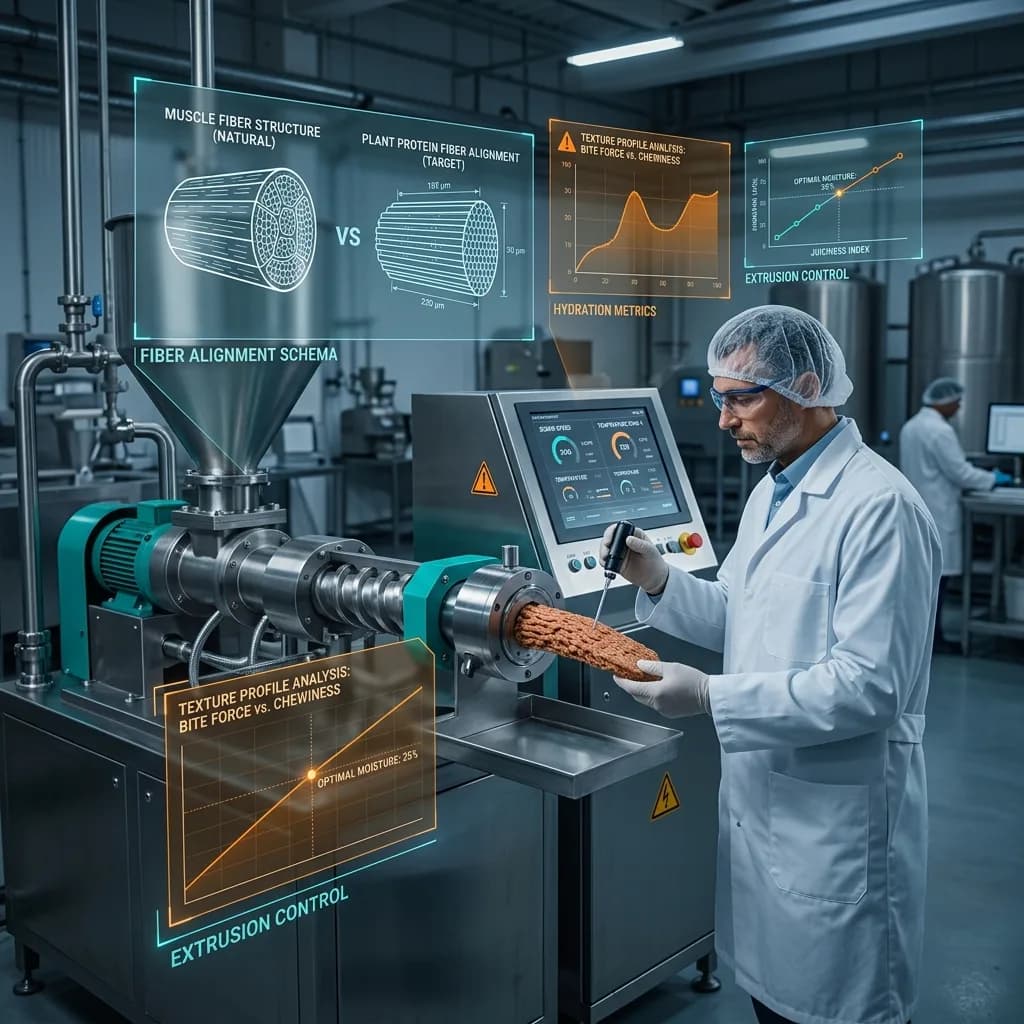
- Aligned muscle fibers (parallel, 50-100 micrometer diameter)
- Connective tissue (perimysium between bundles)
- Water content (70-75% for juiciness)
- Lipid distribution (fat marbling)
Fiber Alignment Technology
Extrusion Process:
Equipment: High-pressure extruder
- Protein source: Soy protein isolate, pea protein, mycoprotein
- Pressure: 50-200 bar (higher = better alignment)
- Temperature: 80-100 degrees C (protein partial cooking, alignment)
- Orifice design: Small openings force fiber alignment
- Exit: Fibers emerge aligned parallel
Mechanism:
Pressure forces protein strands through restrictive space:
- Shear stress: Aligns protein chains
- Result: Parallel fiber formation (mimics muscle)
- Cooling: Sets fiber structure
Fiber Characteristics After Extrusion:
| Parameter | Value | Mimics Meat |
|---|---|---|
| Fiber diameter | 50-100 micrometers | Natural muscle fibers |
| Alignment | Parallel (over 90% aligned) | Natural muscle bundles |
| Tensile strength | Increased 3-5x | Meat fiber strength |
| Bite resistance | Requires chewing | Natural meat texture |
Hydration Optimization
Moisture Content Effects:
| Moisture Level | Texture | Juiciness | Consumer Feel |
|---|---|---|---|
| under 20% | Tough, dry | Dry mouthfeel | Undesirable |
| 25% (optimal) | Tender, juicy | Realistic bite | Meat-like |
| 30-35% | Soft, tender | Juicy | Desirable but risky |
| over 35% | Mushy | Too wet | Undesirable |
Moisture Control Methods:
- Input hydration: Add water to protein paste (target 25%)
- Extrusion retention: High pressure contains moisture
- Post-extrusion: Steam treatment adds/controls moisture
- Coating: Oils/fats reduce moisture loss
Binding System (To Hold Water):
- Proteins: Act as binder (retain moisture)
- Starches: 3-5% addition (water absorption)
- Gums: 0.5-1% (xanthan or guar - viscosity)
- Combined: System holds 25-30% moisture stably
Advanced Modifications
Texture Layering (Multiple Fiber Types):
Some innovations create multiple layers:
- Core: Tightly aligned fibers (bite resistance)
- Middle: Medium fiber density (chew)
- Outer: Looser fibers (skin texture)
- Result: Complex bite experience
Marbling Simulation:
Plant-based fat addition:
- Coconut oil: Saturated fat (meat mimicry)
- Cocoa butter: Melts at body temp (juiciness feel)
- Distribution: 15-20% fat creates marbling appearance
Color Development:
Natural browning:
- Beet extract: Red color (meat hue)
- Maillard reaction: Heat treatment creates brown (cooked meat appearance)
- Heme (optional): Proprietary ingredient adds meat-like taste
Quality Control
Texture Testing:
- Texture analyzer: Measure compression force (bite resistance)
- Bite test: Trained sensory panel (consumer-like assessment)
- Fiber microscopy: Verify alignment (visual confirmation)
Standards:
- Fiber alignment: over 90% parallel (target)
- Tensile strength: 3-5 MPa (meat-like)
- Moisture: 25 +/- 2% (optimal range)
- Bite force: 50-100 N (meat-like)
Cost-Benefit Analysis
| Factor | Impact |
|---|---|
| Extruder equipment | $500K-2M |
| Processing cost/lb | $1-2 additional |
| Consumer acceptance | 40% to 60% meat-eaters |
| Market premium | +$3-5/lb vs. commodity |
| Volume increase | +100-200% with meat-like texture |
| Payback | 2-3 years (high volume) |
For plant-based manufacturers, fiber alignment technology enables meat-eater market penetration with realistic texture.