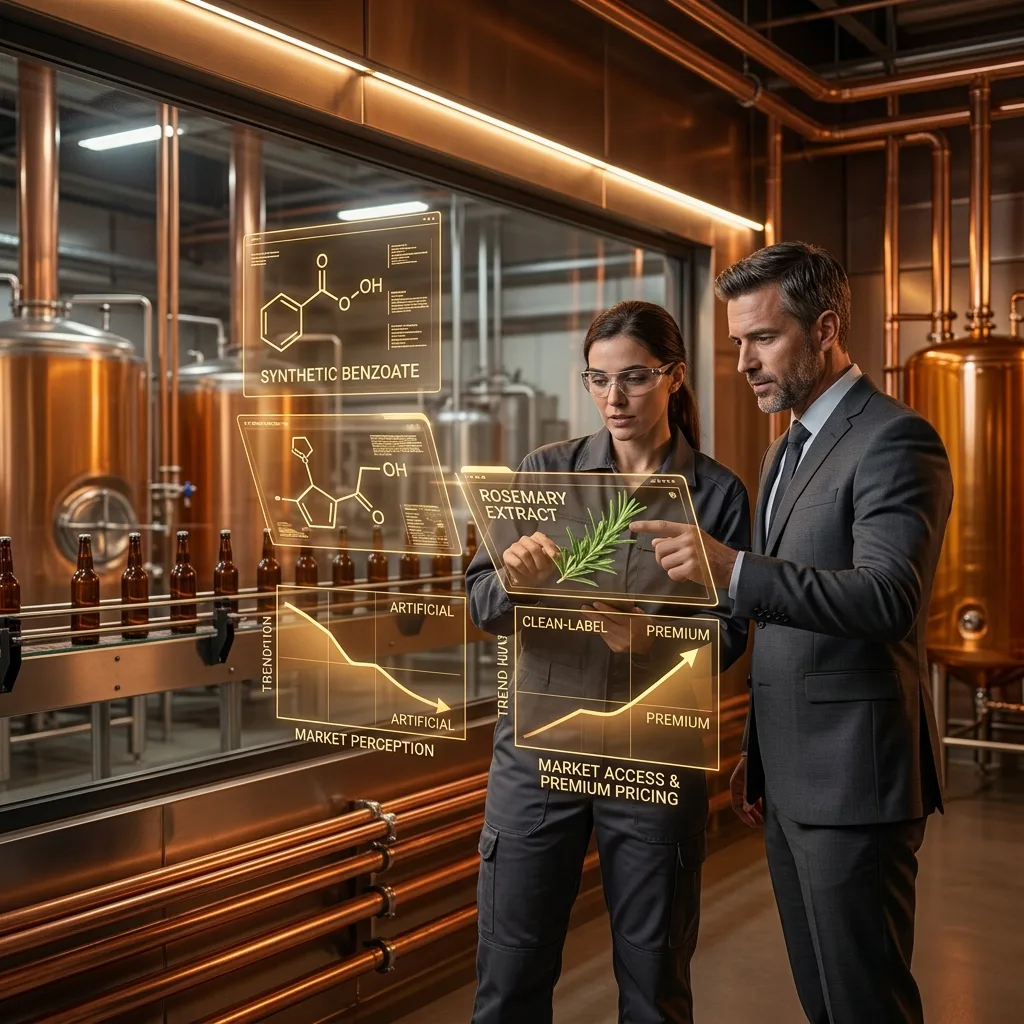
A beverage company uses synthetic preservative (sodium benzoate 0.1%). Result: "Artificial" label concern, clean-label consumers avoid, premium market lost.
An innovative brand replaces with rosemary extract (0.1%). Result: "Natural preservative" label appeal, clean-label certification achieved, premium $1-2/bottle pricing (+40-80%), millennial/Gen-Z consumer loyalty high.
Natural preservatives directly impact clean-label positioning and premium market access.
The Natural Preservatives Framework
Problem with Synthetic Preservatives:
Traditional preservatives (benzoates, sorbates):
- Regulatory: FDA approved, safe at allowed levels
- Perception: Consumer view as "artificial," "chemical"
- Market limitation: Clean-label consumers reject
- Premium impact: Loses $1-2/unit potential
Solution: Plant Extract Preservatives
Natural alternatives:
- Perception: "Plant-based," "natural" appeal
- Efficacy: 70-90% effectiveness vs. synthetic
- Regulatory: GRAS status (generally recognized as safe)
- Market access: Clean-label certification possible
Common Natural Preservatives
Preservative 1: Rosemary Extract (Carnosic Acid)
Source: Rosemary leaves (Rosmarinus officinalis)
Mechanism: Antioxidant phenolic compounds
- Active components: Carnosic acid, rosmarinic acid
- Function: Prevents oxidation (fat/oil rancidity)
- Application: Bakery, oils, nuts, meat products
Dosage: 0.05-0.2% by weight
- Typical: 0.1-0.15% (effective in most products)
- Cost: $5-15/lb
- Effectiveness: 80-90% vs. synthetic
Example (Bakery):
- Without: Shelf-life 5-7 days (staleness/oxidation)
- With rosemary extract: Shelf-life 10-14 days
- Result: 3-5 day extension, fresh appeal
Preservative 2: Green Tea Extract (EGCG)
Source: Green tea leaves (Camellia sinensis)
Mechanism: Polyphenol antioxidants
- Active component: Epigallocatechin gallate (EGCG)
- Function: Powerful antioxidant, prevents browning/oxidation
- Application: Beverages, juices, nuts, supplements
Dosage: 0.05-0.3% by weight
- Typical: 0.1-0.2%
- Cost: $8-20/lb
- Effectiveness: 85-95% vs. synthetic
Unique benefit: Added health marketing (antioxidant content)
- Consumer perception: "Antioxidant boost"
- Dual positioning: Preservative + functional ingredient
Preservative 3: Grape Seed Extract (Proanthocyanidins)
Source: Grape seeds (wine/juice byproduct)
Mechanism: Polyphenol antioxidants
- Active component: Proanthocyanidins
- Function: Strong antioxidant, prevents browning
- Application: Beverages, wine, vegetable oils
Dosage: 0.05-0.15% by weight
- Cost: $10-25/lb (premium)
- Effectiveness: 80-90% vs. synthetic
Preservative 4: Nisin (Fermentation-Derived)
Source: Fermentation of Lactococcus lactis bacteria
Mechanism: Antimicrobial peptide
- Active component: Nisin protein
- Function: Kills pathogenic bacteria (not oxidation)
- Application: Dairy, meat, low-acid foods
Dosage: 0.001-0.02% by weight
- Cost: $50-100/lb (expensive but effective at low dose)
- Effectiveness: 95%+ vs. synthetic
- Regulatory: GRAS status, FDA approved
Unique benefit: Targets pathogens (not just oxidation)
Preservative 5: Natamycin (Fermentation-Derived)
Source: Fermentation of Streptomyces natalensis
Mechanism: Antifungal compound
- Active component: Polyene macrolide antibiotic
- Function: Prevents mold/fungal growth
- Application: Cheese, yogurt, fresh products
Dosage: 0.001-0.02% by weight
- Cost: $100-200/lb (premium)
- Effectiveness: 95%+ vs. synthetic
- Regulatory: GRAS, FDA approved
Unique benefit: Targets fungal spoilage specifically
Effectiveness Comparison
| Preservative | Type | Effectiveness | Cost | Clean-Label |
|---|---|---|---|---|
| Sodium benzoate | Synthetic | 100% baseline | Low ($1-2/lb) | Poor |
| Rosemary extract | Natural | 80-90% | Medium ($5-15/lb) | Excellent |
| Green tea extract | Natural | 85-95% | Medium ($8-20/lb) | Excellent |
| Grape seed | Natural | 80-90% | High ($10-25/lb) | Excellent |
| Nisin | Fermented | 95%+ | High ($50-100/lb) | Excellent |
Market Positioning
Clean-Label Certification:
Organizations (third-party verification):
- Clean Label Project: Certifies clean ingredients
- Fair Trade: Environmental responsibility
- Organic: No synthetic inputs
Premium Pricing:
- Synthetic preservatives: Commodity pricing
- Natural preservatives: +20-50% premium justified
- Clean-label brands: +50-100% premium possible
Consumer Appeal:
Target demographics:
- Millennials: 78% prefer "natural" ingredients
- Gen-Z: 88% willing to pay more for clean-label
- Health-conscious: Actively seek natural alternatives
Cost-Benefit Analysis
| Factor | Cost/Impact |
|---|---|
| Ingredient cost | +$0.05-0.30/unit |
| Clean-label certification | $1-5K |
| Label marketing | +20-50% premium justified |
| Consumer willingness | High (clean-label trend) |
| Shelf-life | Maintained or extended |
| Market expansion | +30-50% market access |
| Revenue potential | +$500K-5M/year (scale) |
For clean-label manufacturers, natural preservatives enable premium positioning and market expansion.