
A facility operates with reactive maintenance: Fix equipment when it breaks.
This approach minimizes maintenance cost—on paper. But it maximizes downtime, emergency repair costs, and unplanned production disruptions. When the separator fails mid-shift, production stops until repair is complete.
Progressive manufacturers use preventive maintenance—systematically servicing equipment before failures occur.
The Maintenance Cost Trade-Off
Reactive Maintenance:
- Maintenance cost: $50K annually (emergency repairs, parts)
- Downtime: 120 hours annually (80% unplanned)
- Downtime cost: $6M annually ($50K/hour production value)
- Total: ~$6.05M annually
Preventive Maintenance:
- Maintenance cost: $150K annually (scheduled servicing, parts, technician time)
- Downtime: 40 hours annually (mostly planned)
- Downtime cost: $2M annually
- Total: ~$2.15M annually
Annual difference: $3.9M in favor of preventive maintenance
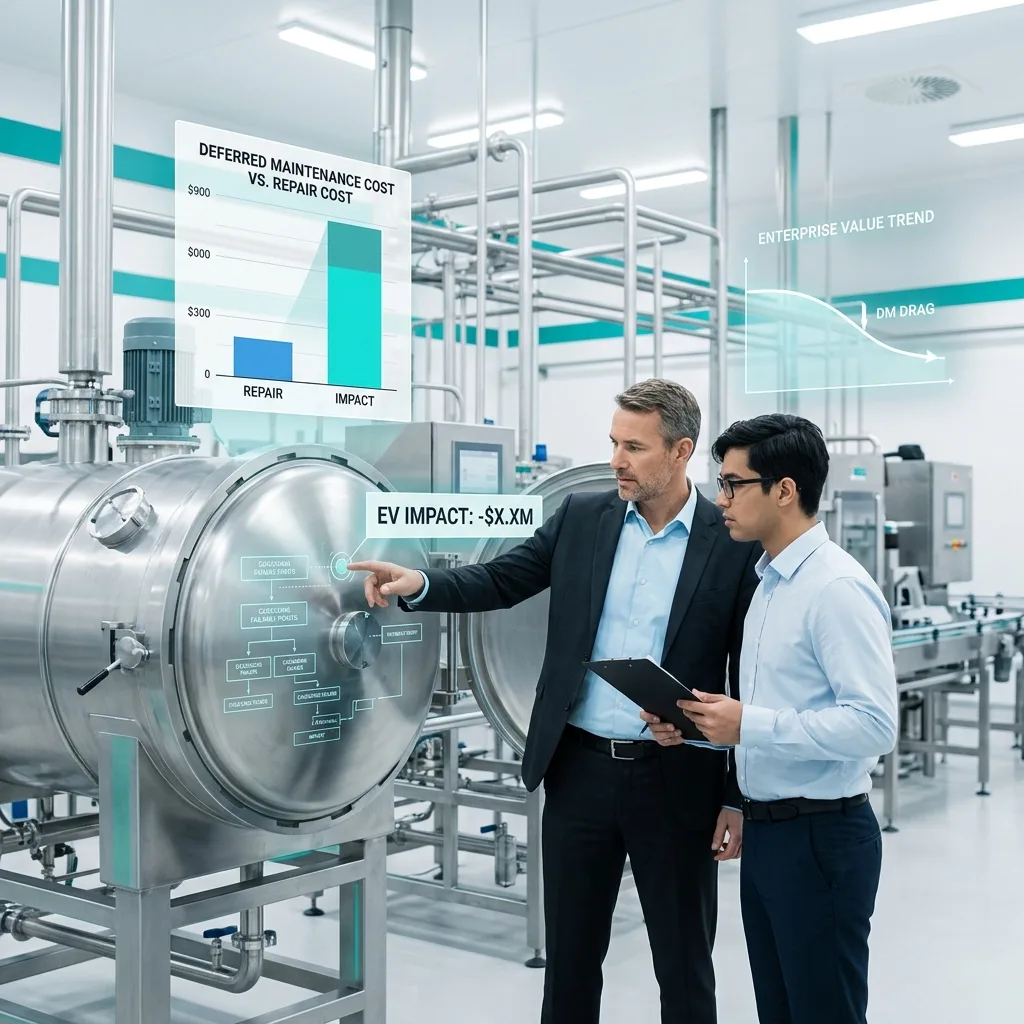
Yet many facilities operate reactively because the maintenance cost appears lower ($50K vs. $150K), ignoring downtime costs.
The Preventive Maintenance Elements
Condition Monitoring:
- Oil analysis (equipment deterioration indicator)
- Vibration monitoring (bearing failure predictor)
- Temperature monitoring (overload indicator)
- Performance trending (speed, pressure, flow changes)
Scheduled Maintenance:
- Filter replacement (every 500 operating hours)
- Lubrication (weekly, monthly, quarterly depending on component)
- Seal/bearing inspection (annually)
- Calibration (annually or per specification)
Documentation:
- Maintenance logs tracking all work performed
- Equipment history trending maintenance patterns
- Parts inventory ensuring availability for planned maintenance
The Maintenance Program Design
Step 1: Asset Criticality Analysis Identify equipment where failure has highest impact:
- Top 10 critical assets = 80% of downtime risk
- Focus preventive program on these assets
Step 2: OEM Recommendations Manufacturer provides maintenance schedules based on design. Follow or exceed these.
Step 3: Condition Monitoring Rather than blindly following schedules, use condition data to adjust timing:
- Equipment running cool and clean: Extend maintenance intervals
- Equipment degrading: Advance maintenance before failure
Step 4: Spare Parts Management Critical assets require spare parts inventory (pumps, motors, seals). Emergency repair delays multiply downtime cost.
The Maintenance ROI
Preventive maintenance program investment:
- Condition monitoring equipment: $50K
- Spare parts inventory: $100K
- Technician training: $20K
- First-year program implementation: $30K
- Annual ongoing: $100-150K
Facilities implementing preventive maintenance typically achieve:
- 30-50% reduction in downtime hours
- 20-30% reduction in emergency repair costs
- 10-15% improvement in OEE (from availability gain)
For a facility with $6M annual downtime cost, 30% reduction saves $1.8M annually—ROI of 400% on preventive program.
The Maintenance Culture
Effective preventive programs require:
- Leadership commitment to allocating budget for prevention
- Technician training and certification programs
- Production team communication about planned maintenance
- Continuous improvement in maintenance procedures
For food manufacturing companies, transitioning from reactive to preventive maintenance reduces downtime, improves OEE, and delivers strong financial return on maintenance investment.