A bakery produces gluten-free products in a shared facility with wheat flour production. Result: Tests reveal 50-100 ppm gluten (cross-contamination from wheat flour dust). Cannot label "gluten-free," fails certification, celiac market lost.
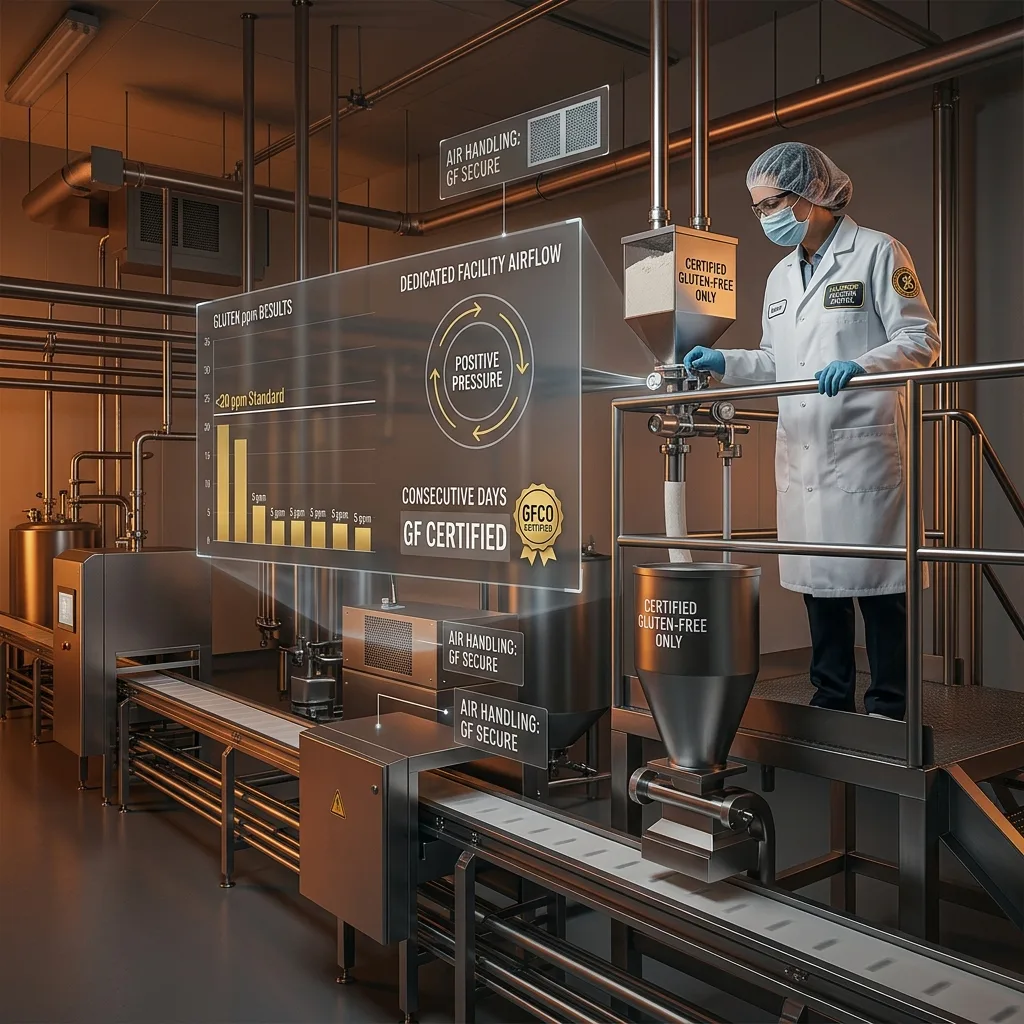
A dedicated gluten-free facility implements strict protocols: Separate equipment, dedicated air handling with positive pressure, testing every batch. Result: Under 5 ppm gluten consistently (well below 20 ppm standard), FDA/GFCO certification achieved, celiac community trust established, premium market positioning (+30-50%) captured.
Gluten-free processing directly impacts celiac safety and premium market access.
The Gluten-Free Framework
Regulatory Standards:
- FDA Standard: Under 20 ppm gluten (legally gluten-free)
- GFCO Certification: Under 10 ppm (voluntary, stricter standard)
- European Standard: Under 20 ppm (equivalent to FDA)
- Best Practice: Under 5 ppm target (complete safety margin)
Why So Critical:
Celiac disease (autoimmune):
- 1-2% population affected (3+ million in USA)
- Ingestion of gluten damages small intestine
- Long-term health consequences: malabsorption, disease complications
- Medical need: Absolutely gluten-free required
Cross-Contamination Risk:
Even tiny amounts cause problems:
- Wheat flour airborne dust: 50+ ppm possible
- Shared equipment: Flour residue persistence
- Shared utensils: Crumb contamination
- Shared water/refrigeration: Vapor exposure
Dedicated Facility Design
Facility Separation:
Physical location:
- Separate building (best): Complete isolation
- Separate room (acceptable): Distinct air handling
- Same room (risky): Difficult to control cross-contamination
Equipment Dedication:
All gluten-free equipment:
- Mixers, scales, utensils: Gluten-free only
- Never used for wheat products
- Stainless steel preferred (smooth, easy to clean)
- Avoid porous materials (wood, cork - harbor gluten)
Surface Treatment:
Stainless steel:
- Smooth finish: No crevices for flour
- Easy sanitization: Washable, non-absorbent
- Example cost: Mixer upgrade $15-50K
Air Handling Control
Positive Pressure System:
Purpose: Prevent gluten flour dust infiltration
- Design: Air pressure higher in gluten-free area
- Filtration: HEPA filters (remove particles over 0.3 micrometers)
- Result: Gluten dust pushed out, clean air in
Process:
- Fresh air drawn in (filtered)
- Pressurization: Higher pressure maintained
- Air exits through exhaust (one-way)
- Result: Gluten particles cannot drift in
Cost: $50-150K system installation
Cross-Contamination Prevention Protocols
Scheduling:
Process sequence (critical):
- Gluten-free production FIRST (each day)
- Conventional production AFTER
- Never reverse order (gluten to gluten-free = contamination)
Cleaning Validation:
Verify equipment is truly clean:
- ATP swabs: Confirm no organic residue (targets protein)
- ELISA gluten test: Specific gluten detection (under 5 ppm)
- Post-cleaning verification required before gluten-free run
Personnel Control:
Workers prevent cross-contamination:
- Dedicated gluten-free staff (separate clothing/hair covers)
- Hand washing/sanitization between areas
- No shared break rooms (cross-contamination risk)
- Training: All staff understand gluten-free criticality
Ingredient Verification:
Every ingredient certified:
- Suppliers provide gluten-free certification
- Ingredients tested batch-by-batch (optional but thorough)
- Approved supplier list maintained
Testing Program
Testing Frequency:
- Daily: ELISA test (gluten detection, under 5 ppm target)
- Weekly: ATP test (general sanitation)
- Monthly: Environmental swabs (surfaces)
- Quarterly: Third-party verification
Testing Method (ELISA):
Enzyme-linked immunosorbent assay:
- Detects gluten protein
- Sensitivity: 5-10 ppm (exceeds regulatory need)
- Cost: $50-100/test
- Results: Under 5 ppm = certified gluten-free
Certification Pathways
FDA Gluten-Free Labeling:
Requirements:
- Under 20 ppm gluten demonstrated
- Documentation and testing
- Label claim: "Gluten-Free"
GFCO (Gluten-Free Certification Organization):
Voluntary stricter standard:
- Under 10 ppm requirement
- Annual audit required
- Seal on packaging: Consumer recognition
- Premium market positioning: Strong consumer trust
Cost-Benefit Analysis
| Factor | Cost/Impact |
|---|---|
| Dedicated facility setup | $100-300K |
| Equipment replacement | $50-100K |
| Air handling system | $50-150K |
| Testing program (annual) | $10-20K |
| Training/personnel | $5-10K |
| Total capital investment | $215-570K |
| Premium market access | Celiac $8B+ market |
| Price premium | +30-50% justified |
| Market share gain | 10-30% possible |
| ROI | 2-4 years typical |
For gluten-free manufacturers, dedicated facilities enable certification and premium celiac market positioning.