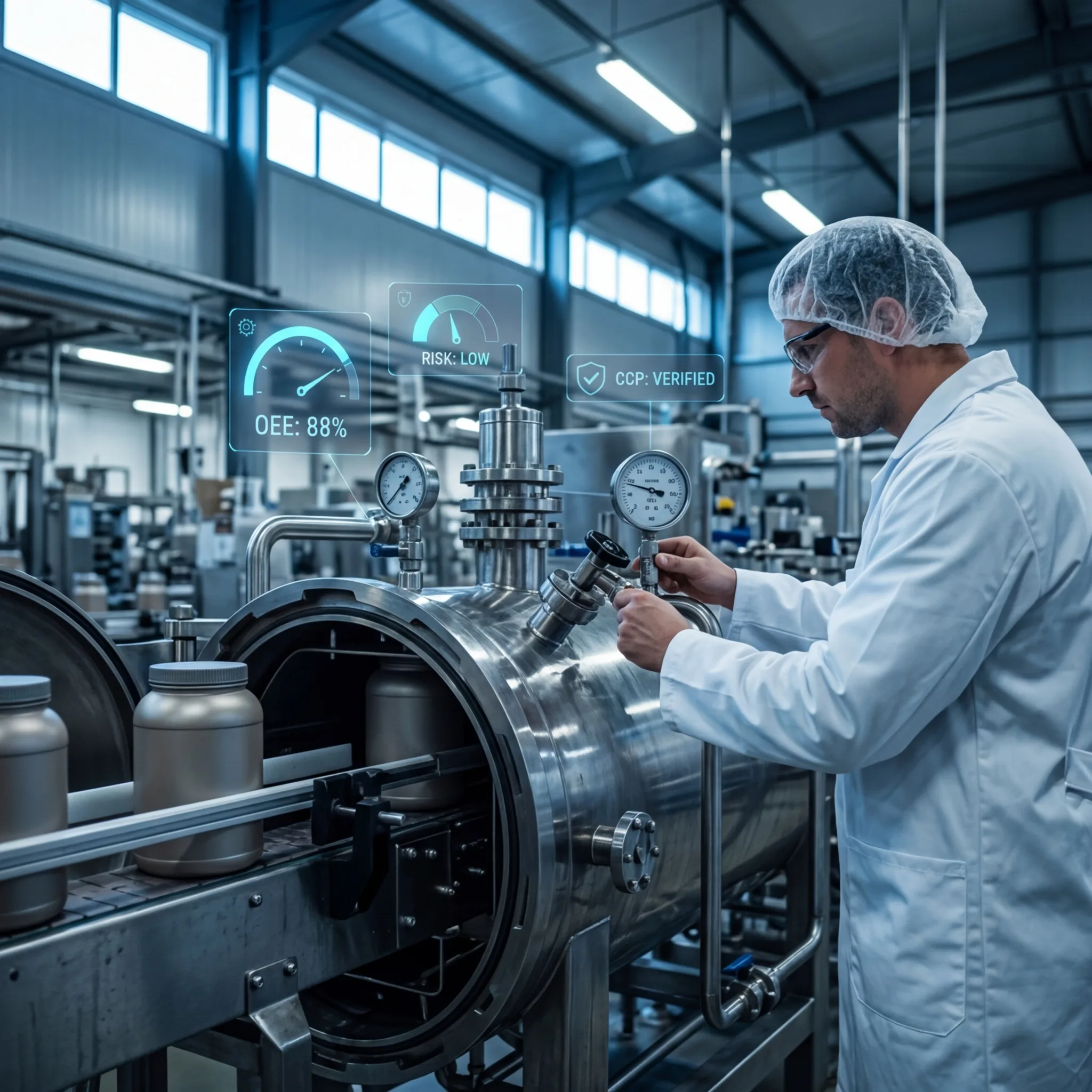
A facility passes FDA inspection with no significant findings. The regulatory requirement is met.
But inspection passage doesn't equal food safety excellence. A facility with strong safety culture goes beyond minimum compliance—it systematically prevents food safety issues before they occur.
The difference: Compliance thinking (What's the minimum required?) vs. excellence thinking (What's the best practice that prevents all problems?).
The Maturity Levels
Level 1: Reactive Compliance (Minimum)
- Policies and procedures written to meet regulatory requirement
- Training conducted because regulations require it
- Audit findings addressed minimally to achieve compliance
- Food safety "owns" the problem; others see it as compliance burden
- Risk: Audit-to-audit approach misses emerging issues
Level 2: Systematic Compliance (Intermediate)
- Documented preventive controls and HACCP system
- Regular training with effectiveness tracking
- Routine internal audits identifying non-compliances
- Food safety embedded in operational decision-making
- Risk: Process-focused; may lack engagement
Level 3: Safety Culture Excellence (High Maturity)
- Organization-wide ownership of food safety
- Employees empowered to stop production if safety at risk
- Continuous improvement mindset identifying and fixing vulnerabilities
- External partnerships with universities, consultants for best practices
- Risk: Minimal; proactive identification of emerging issues
- Outcome: Zero recalls; preferential regulatory treatment
The Culture Components
Leadership Commitment:
- CEO/Plant Manager attends monthly food safety meetings
- Food safety factored into executive performance evaluations
- Resources allocated for training and system improvements without debate
- Visible leadership messaging about safety priority
Employee Empowerment:
- All employees trained on safety procedures specific to their role
- "Stop work" authority if safety concern identified
- Reward system for safety suggestions
- Transparent communication about safety incidents and improvements
Process Excellence:
- Preventive controls mapped and validated
- Environmental monitoring program (surfaces, airflow, water)
- Supplier approval program verifying ingredient safety
- Product traceability allowing rapid recall execution if needed
Continuous Improvement:
- Post-incident root cause analysis using systematic methodology
- Trend analysis identifying emerging patterns
- Benchmarking against best-in-class facilities
- Annual review and update of food safety systems
The Business Case for Excellence
A recall costs millions ($10M-$50M+ for widespread recall). Beyond financial cost:
- Brand damage lasting years
- Customer loss
- Regulatory scrutiny
- Potential criminal liability for executives
Prevention cost: Documented preventive controls system ($100K-$300K investment), training ($50K annually), continuous monitoring ($100K annually) = ~$300-500K annual commitment.
Recall risk: 1-2% annual probability if reactive; under 0.1% probability if excellent = value of prevention.
The PE Investor Perspective
PE firms increasingly evaluate food safety maturity as part of operational excellence. A facility with:
- Documented preventive controls system
- Zero recalls in past 5 years
- Environmental monitoring program
- Engaged management team
...commands premium valuation vs. facility with minimum compliance mentality.
For food manufacturing companies, transitioning from compliance mindset to safety culture excellence protects brand, reduces risk, and demonstrates operational maturity to PE investors.