A frozen vegetable producer skips blanching to save time. Result: Vegetables darken within 2 weeks (enzymatic browning). Flavor develops off-notes. Texture becomes mushy (cell wall degradation). Shelf-life only 3 months.
A compliant producer blanches all vegetables (90C, 3 minutes). Peroxidase enzyme inactivated. Browning prevented for 18+ months. Flavor stable. Texture preserved. Premium frozen vegetable reputation maintained.
Enzyme inactivation through blanching directly impacts frozen product shelf-life and quality.
The Enzyme Framework
Enzymes and Spoilage:
Enzymes cause:
- Browning: Polyphenol oxidase (PPO) oxidizes phenolics
- Flavor loss: Lipoxygenase oxidizes fats (rancidity)
- Texture degradation: Pectinase breaks down pectin (mushiness)
- Color loss: Chlorophyllase degrades chlorophyll (browning)
D-Value Concept (Heat Resistance):
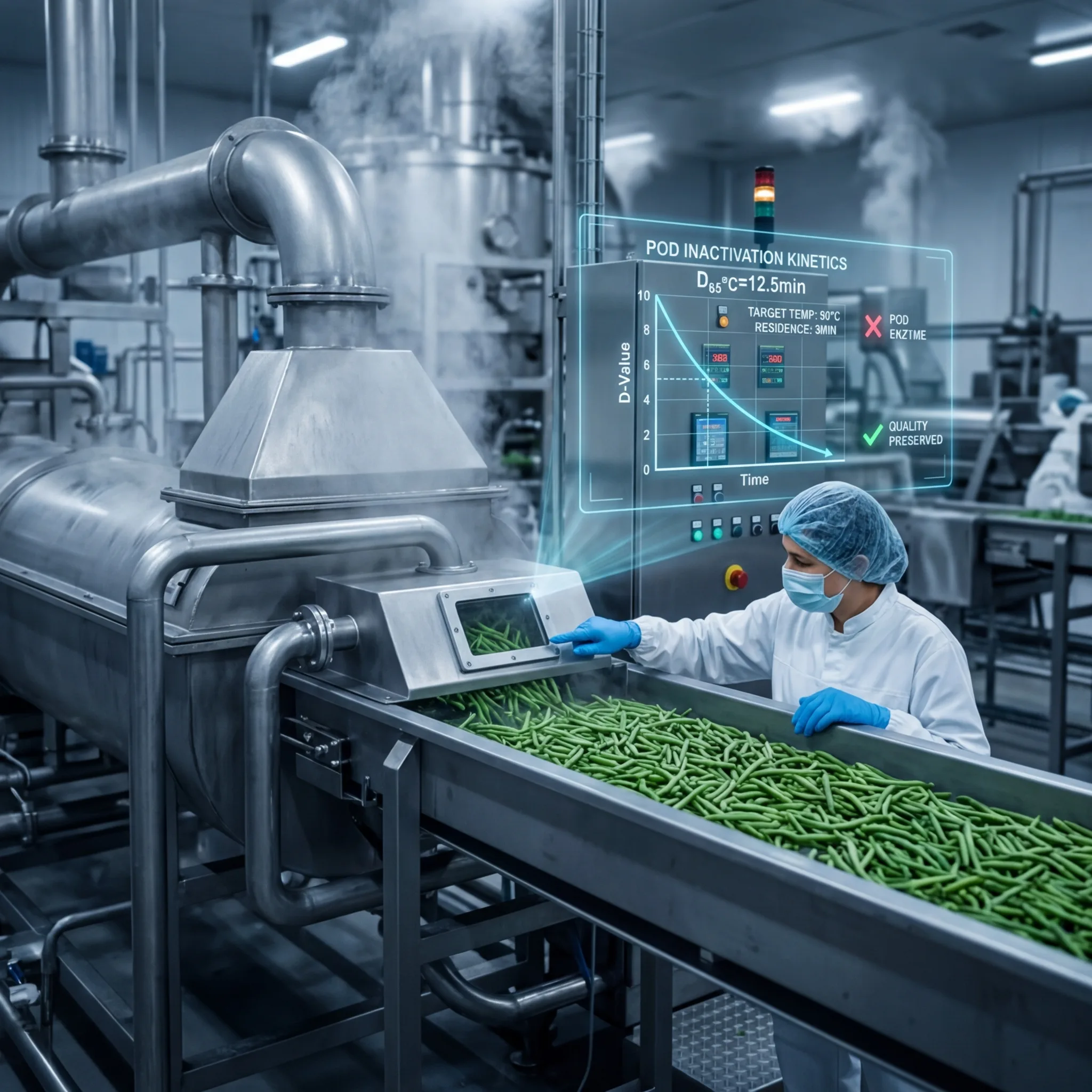
D-value = Time (minutes) to reduce enzyme activity 90% at target temperature
- Peroxidase (POD): D at 65C = 10-15 minutes (very heat-resistant)
- Polyphenol oxidase (PPO): D at 70C = 2-5 minutes
- Lipoxygenase: D at 70C = 1-2 minutes
Blanching Target:
Inactivate peroxidase (most heat-resistant enzyme)
- Temperature: 90-100C
- Time: 3-10 minutes (product dependent)
- Result: over 99% enzyme inactivation
Blanching Equipment
Water Blancher:
Design: Product immersed in hot water (90-100C)
- Capacity: 500-5,000 kg/hour
- Time: 3-10 minutes (depending on product size)
- Temperature control: +/-1C precision
- Cooling: Water spray or ice bath immediately after
Advantages:
- Simple, reliable equipment
- Low cost
- Effective enzyme inactivation
Disadvantages:
- Water soluble nutrient loss (leaching)
- Nutrient transfer: 10-15% loss possible
- Product soggy if not cooled quickly
Steam Blancher:
Design: Product exposed to steam (100-110C)
- Saturated steam (no water contact)
- Time: 2-5 minutes
- Temperature control: Precise steam management
- Cooling: Cold water spray
Advantages:
- No nutrient leaching (better quality)
- Nutrient retention: 95%+
- Faster inactivation (higher temperature)
Disadvantages:
- Higher capital cost
- More complex operation
- Residual moisture on product (affects freezing)
Blanching Optimization
Time-Temperature Relationship:
| Temperature | Time | POD Inactivation | Nutrient Retention |
|---|---|---|---|
| 80C | 10 min | 80% | 98% |
| 90C | 5 min | 95% | 96% |
| 100C | 3 min | 99% | 94% |
| 110C (steam) | 2 min | 99.9% | 92% |
Optimal: 90C for 3-5 minutes (balance inactivation and retention)
Quality Impact
Color Preservation:
Unblanched frozen peas (3 months): Gray-brown (enzymatic browning) Blanched frozen peas (18 months): Bright green (color stable)
Texture:
Unblanched: Mushy (pectinase degrades pectin) Blanched: Firm texture maintained (enzyme inactivated)
Flavor:
Unblanched: Off-flavors (lipoxygenase oxidation) Blanched: Fresh flavor (enzyme inactivated)
Validation
Peroxidase Testing:
After blanching, test for POD enzyme activity
- Positive test: Enzyme still active (blanching failed)
- Negative test: Enzyme inactivated (blanching successful)
Quick Test:
- Extract enzyme from blanched product
- Add substrate (hydrogen peroxide)
- No color change = enzyme inactivated (pass)
- Color change = enzyme active (fail - re-blanch)
Cooling After Blanching
Critical: Cool quickly after blanching
- Time in danger zone (10-65C): under 2 hours
- Method: Ice bath or cold water spray
- Rapid cooling prevents microbial growth
Post-Blanching Process:
- Drain hot product (remove excess water)
- Cool to under 10C within 1-2 minutes (ice bath)
- Freeze immediately (prevent microbial growth window)
Product-Specific Parameters
| Vegetable | Temperature | Time | Notes |
|---|---|---|---|
| Peas | 95C | 3 min | Small items, fast |
| Broccoli | 90C | 4 min | Florets ensure penetration |
| Corn | 95C | 4 min | Dense product, longer time |
| Carrots | 95C | 5 min | Thick items, longer time |
| Green beans | 90C | 3 min | Thin items, shorter time |
Cost-Benefit
| Factor | Impact |
|---|---|
| Blanching cost | $0.05-0.10 per kg |
| Shelf-life extension | 3 months to 18+ months (6x) |
| Quality improvement | Color, texture, flavor preserved |
| Waste reduction | Minimal spoilage during storage |
| ROI | Very high (prevention of spoilage) |
For frozen vegetable manufacturers, proper blanching optimization ensures premium product quality and shelf-life.