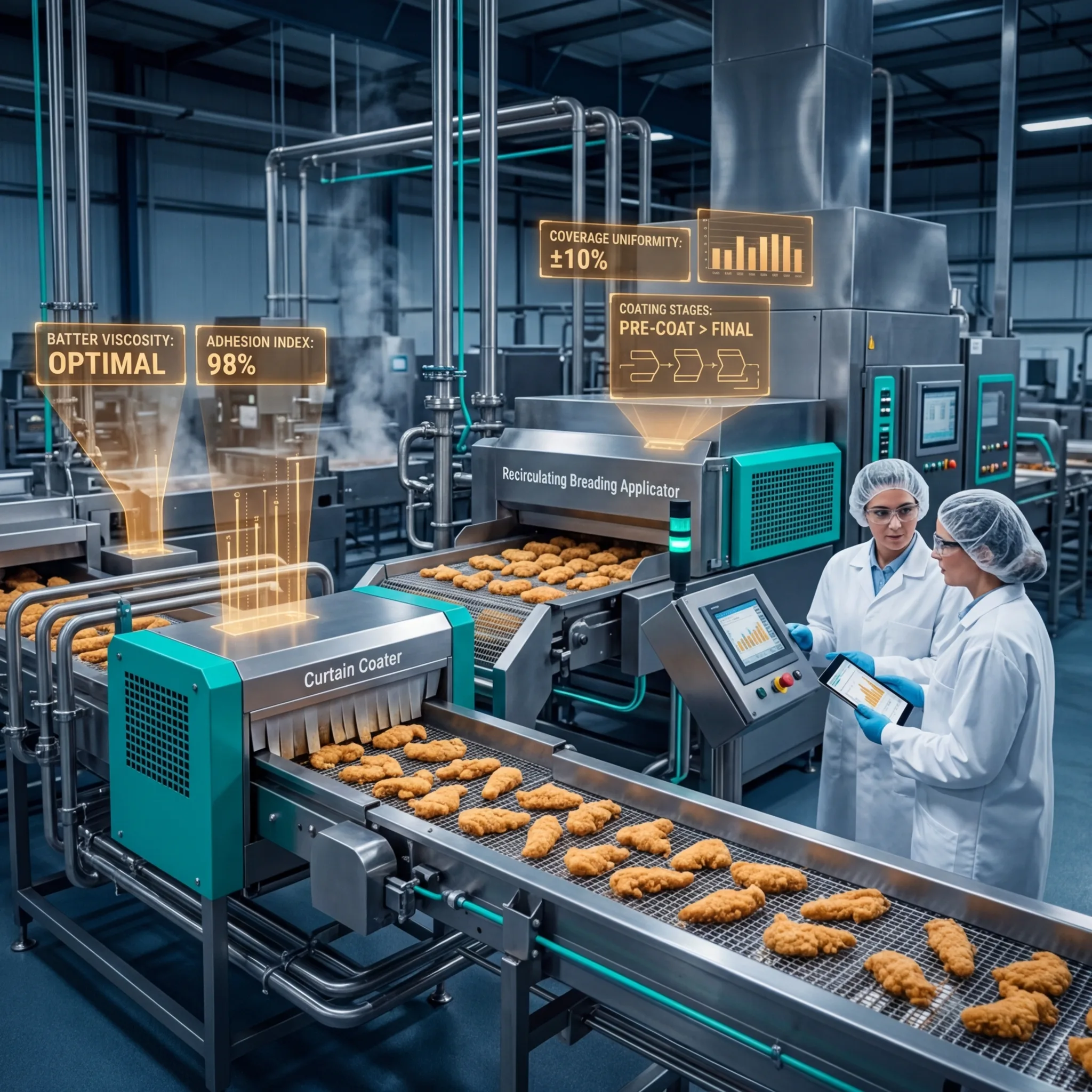
A chicken processor applies breading manually. Result: Inconsistent coating (50-200% coverage). Product appearance variable. Throughput limited (50 kg/hour). Labor intensive. Coating waste significant.
A modern facility installs automatic breading line with pre-coating and final coating stations. Achieves consistent 100 +/- 10% coverage. Throughput 500 kg/hour. Labor reduced 90%. Coating waste reduced 40%.
Coating and breading equipment selection directly impacts product appearance, consistency, and operational efficiency.
The Coating Framework
Coating Objectives:
- Adhesion: Coating adheres to product during cooking
- Uniformity: Even coverage (no bare spots)
- Appearance: Golden color, appealing texture
- Functionality: Crispy exterior, juicy interior
- Consistency: Batch-to-batch uniformity
Coating Process Stages
Stage 1: Pre-coating (Optional)
Apply thin film to improve adhesion:
- Egg wash (eggs + water, 1:1 ratio)
- Milk batter (mild adhesive)
- Spray application (3-5 second dwell)
Purpose: Helps breading particles stick to product
Stage 2: Breading Station
Apply main coating:
- Breadcrumb or batter application
- Top and bottom exposure
- Adhesion drying (optional, 5-10 seconds)
Coverage Specification:
Target: 100% coverage (product not visible through breading) Tolerance: 90-110% (slight excess acceptable) Measurement: Visual inspection + weight (g coating per kg product)
Coverage Calculation:
Pre-breaded chicken breast: 150 g Target coating: 30 g (20% by weight) Final weight: 180 g Coverage: 30/150 = 20% ratio
Stage 3: Final Coating (Optional)
Second breading application for extra crispiness:
- Light re-dusting of fine breadcrumbs
- Improves appearance and texture
Breading Equipment Types
Drum Breader (Tumble Coating):
Design: Rotating drum with perforated basket, product tumbles through coating
- Application: Small items (shrimp, nuggets, vegetables)
- Capacity: 20-100 kg per batch
- Time: 30-60 seconds tumbling
- Coverage: 80-95% (some bare spots possible)
Process:
- Load product into basket
- Spray with adhesive (egg wash)
- Rotate drum with coating material
- Product tumbles, becomes coated
- Unload and screen excess breading
Advantages: Simple, low cost, batch processing Disadvantages: Uneven coverage possible, waste of coating material
Enrober (Continuous Coating):
Design: Product conveyor through coating applied top and bottom
- Application: Larger items (chicken breasts, patties, fillets)
- Capacity: 200-1,000 kg/hour
- Coverage: Precise, 95-100%
- Applicator: Sprayers or curtain coating
Process:
- Product on conveyor belt
- Top applicator sprays/applies coating
- Belt inverts product
- Bottom applicator applies coating
- Curing/drying section (optional)
- Product exits fully coated
Advantages: High capacity, precise coverage, consistent Disadvantages: High capital cost ($100K-300K), complex operation
Batter Depositor:
Design: Applies liquid batter in controlled quantity
- Application: Battered items (fish, onion rings)
- Batter thickness: Precisely controlled (3-10 mm)
- Capacity: 100-500 kg/hour
Adhesion Optimization
Pre-treatment Methods:
| Method | Effect | Cost |
|---|---|---|
| Egg wash | Excellent adhesion | Low |
| Milk batter | Good adhesion | Low |
| Thickened batter | Very good adhesion | Moderate |
| Moisture adjustment | Good (damp surface) | Low |
| Drying | Can reduce adhesion | Time |
Key Principle: Moist surface aids breading adhesion; too wet causes clumping
Coating Waste Reduction
Typical Waste Scenarios:
Traditional drum breader: 40-50% waste (breading falls off or unused) Modern enrober: 10-15% waste (precise application)
Cost Impact:
Breading cost: $2-5 per kg Daily throughput: 1,000 kg product Waste at 40%: 400 kg x $3.50 = $1,400 daily waste
Modern system (15% waste): 150 kg x $3.50 = $525 daily waste Daily savings: $875 x 250 days = $219K annually
Equipment payback: 2-3 years through waste reduction alone
Quality Control
Coverage Verification:
- Visual inspection: Ensure no bare spots
- Weight check: Target +/-5% coating weight
- Texture assessment: Crispiness after cooking
Adhesion Testing:
- Cook product (frying or baking)
- Inspect for breading loss
- Acceptance: under 5% loss acceptable
For food manufacturers, proper coating equipment selection improves product appearance, consistency, and profitability through waste reduction.