A PE fund closes a $120M acquisition of a regional dairy processor. The CIM tells a clean story: $15M EBITDA, 82% capacity utilization, experienced management. Financial DD confirms the numbers. The operational walkthrough is a half-day tour — plant looks busy, equipment is running, everyone's smiling.
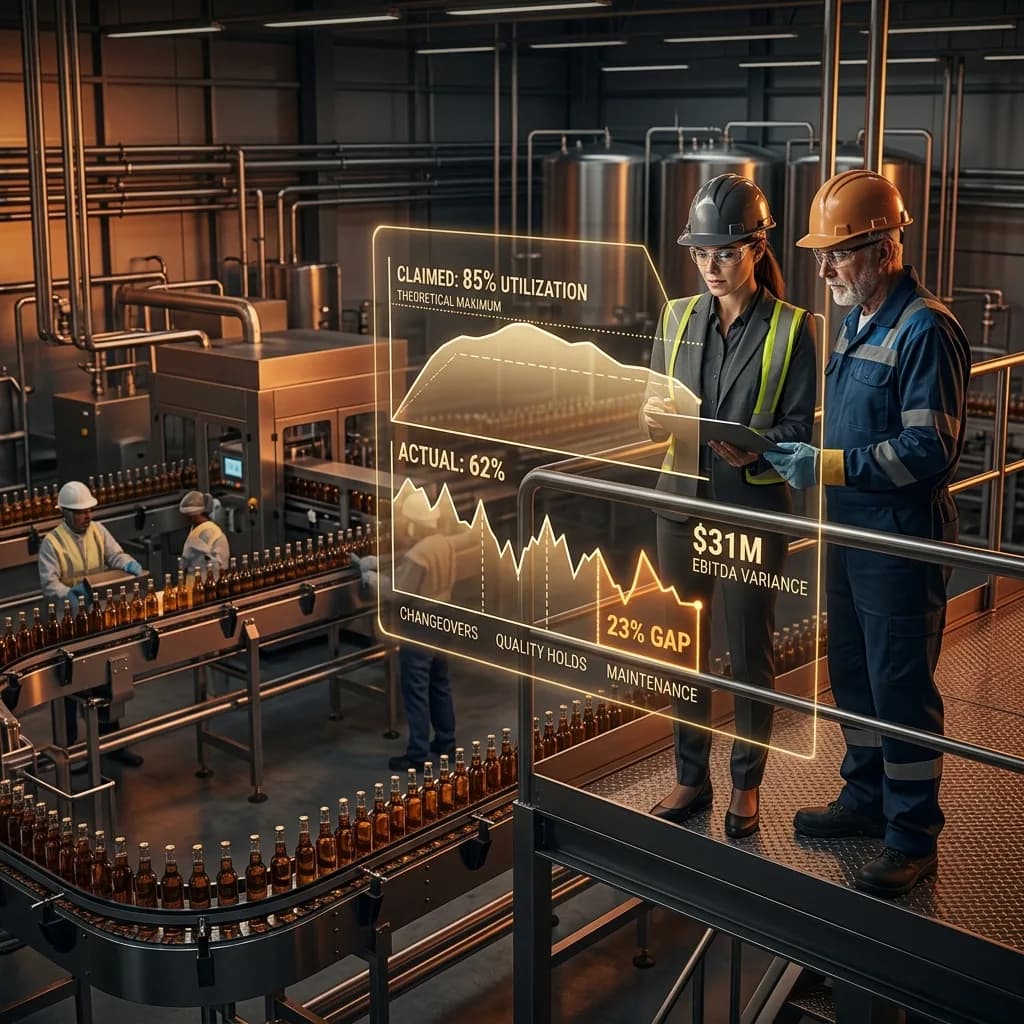
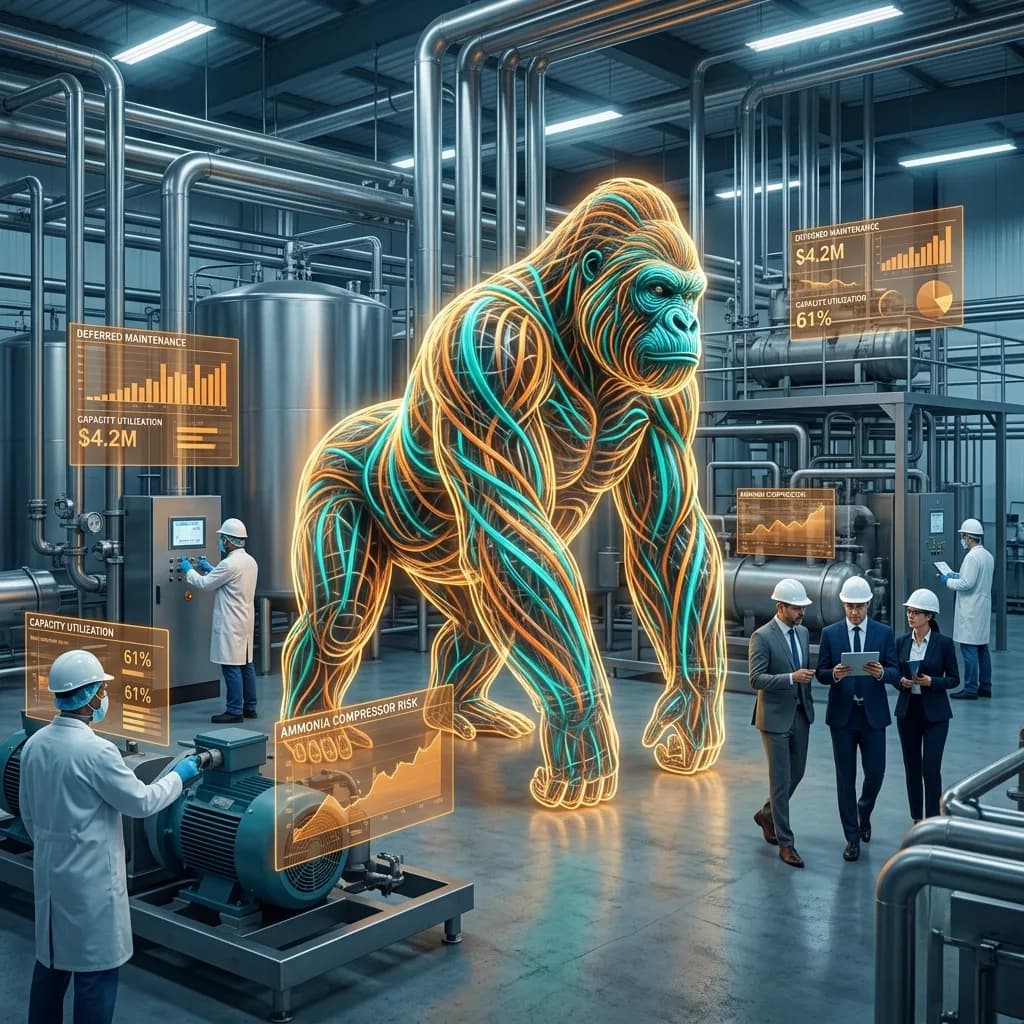
Fourteen months later, the fund writes down $18M. The "82% utilization" was measured during peak season on a single SKU. Actual annualized utilization was 61%. Management had been deferring $4.2M in critical maintenance for three years to inflate EBITDA ahead of the sale. The ammonia refrigeration system needed a $2.8M compressor replacement that nobody mentioned — and nobody asked about.
The gorilla was sitting in the middle of the plant floor the entire time. Everyone walked right past it.
The Invisible Gorilla, Revisited
You've probably seen the famous psychology experiment: subjects watch a video of people passing basketballs and are asked to count the passes. Halfway through, a person in a gorilla suit walks through the frame. Over half the participants don't see it. They're so focused on counting passes that a gorilla — in plain sight — becomes invisible.
PE due diligence has the same problem. Except the gorilla isn't invisible. It's inconvenient.
Acknowledging it means the deal might die. The timeline slips. Someone has to deliver bad news to the investment committee after months of work. So the gorilla sits there, unmentioned, until it shows up in the first board meeting post-close as a "$5M surprise" that wasn't actually a surprise to anyone who'd been paying attention.
In our experience across more than 100 operational assessments in food and beverage manufacturing, roughly 40% of deals have at least one material operational issue — worth over $2M in EBITDA impact — that the deal team either missed or minimized.
Why It Happens
The reasons are deeply human.
Deal momentum is intoxicating. A mid-market fund screening 200 opportunities, issuing 15 LOIs, and reaching exclusivity on one deal builds enormous psychological pressure to close. A maintenance backlog becomes "manageable deferred capex." A plant running at 61% utilization becomes "significant upside potential." The narrative reshapes the facts instead of the other way around.
Confirmation bias is quiet and powerful. By the time operational DD starts, the deal team has spent 6-8 weeks building the model and refining the thesis. They're not evaluating the plant with fresh eyes — they're looking for data that confirms what they've already decided. When a plant manager says "OEE is around 72%," the analyst writes it down. They don't ask to see the hourly production logs or the changeover time data. Those questions might produce answers that complicate things.
Nobody gets promoted for killing a deal. The people closest to operational details — the ones most likely to spot the gorilla — often have the least incentive to point it out. The cultural reality at many firms is that closing deals earns recognition and walking away doesn't. It doesn't matter what the stated values are. People respond to what actually gets rewarded.
Sunk costs create gravity. By the time operational DD happens, $300-500K is already spent on legal, financial, and commercial diligence. The partner championing the deal has staked credibility. Walking away feels like waste — even when it's the most rational decision. The deeper the investment, the harder the exit becomes.
These aren't character flaws. They're predictable human behaviors. And that's exactly why they need to be accounted for structurally — through incentive alignment from the top down that ensures the depth of due diligence matches the magnitude of the check being written.
What the Gorilla Actually Costs
The financial impact compounds faster than most teams expect.
| Issue Category | Typical Discovery Timeline | Average EBITDA Impact |
|---|---|---|
| Deferred maintenance backlog | 3-6 months | $1.5-4M annual |
| Overstated capacity utilization | 6-12 months | $2-5M revenue shortfall |
| Environmental or compliance gaps | 2-8 months | $500K-2M in fines and remediation |
| Key person dependency | 6-18 months | $1-3M productivity loss |
| Aging control systems | 3-9 months | $800K-2M in downtime |
On a $100M deal at 10x EBITDA, a $3M miss translates to $30M in enterprise value erosion. That's the difference between a 2x return and a write-down.
And deferred maintenance doesn't hold still. It grows at 15-25% annually as secondary systems fail. A capacity problem that costs $2M to address today costs $5M in 18 months when customer contracts are lost. The gorilla gets bigger.
The Role of Independent Technical DD
This is where firms like ours exist — and why we tend to be the bearers of news that deal teams don't always want to hear.
An independent operational due diligence firm has one job: give you an honest, technically grounded picture of what you're buying. We don't have deal fees at stake. We're not paid more if the deal closes. If anything, we lean toward finding problems — because that's what protects our clients and our reputation.
We've walked plants where the deal team saw a well-run operation and we saw $6M in deferred maintenance hiding behind fresh paint. We've reviewed capacity claims that looked reasonable on paper and found 25% overstatement when we timed the actual production runs. We've asked the third-shift maintenance tech what they thought of the plant — and gotten answers that weren't in any management presentation.
That's not cynicism. It's rigor. And in a market where multiples leave zero room for operational surprises, it's the difference between an informed decision and an expensive one.
The gorilla is always there. The question is whether your process is designed to see it — or to look the other way.