A food manufacturer generates $50M revenue annually. The founder envisions becoming "the dominant regional dairy provider." But this vision lacks specificity. Is dominant measured by volume? Revenue? Market share? What's the timeline?
Vague strategic vision wastes resources pursuing unclear targets.
Effective growth strategy translates vision into specific, measurable targets and articulates the strategic path to achieve them.
The Strategic Planning Framework
Level 1: Vision Statement (Inspirational, Multi-Year) "Become the leader in sustainable, premium dairy products in the Northeast, recognized for quality, innovation, and customer partnership."
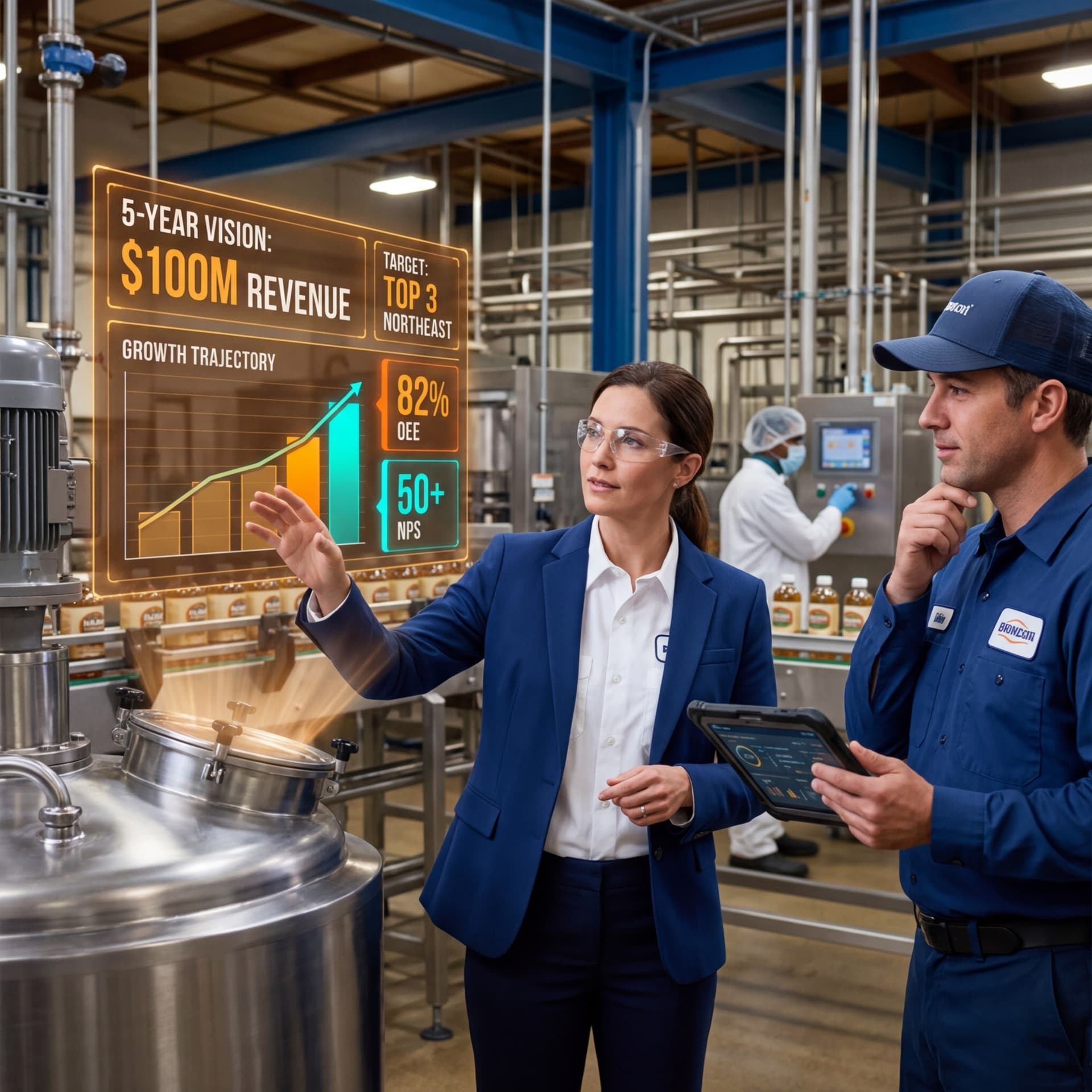
Level 2: Strategic Objectives (3-5 Year)
- Revenue: $100M by Year 5 (from $50M)
- Market Position: Top 3 in Northeast region
- Profitability: 18% EBITDA margin (from 15% currently)
- Customer Satisfaction: 50+ NPS (from 35 currently)
Level 3: Strategic Initiatives (Tactics to Achieve Objectives)
- Product Innovation: Launch 5 new premium SKUs annually
- Market Expansion: Enter Pennsylvania and upstate New York markets
- Operational Excellence: Improve OEE to 82% (from 75%)
- Sales Excellence: Build dedicated account management for top 50 customers
- Brand Building: Develop sustainability story and third-party certifications
Level 4: Annual Operating Plan (Executable)
- Revenue target: $60M (Year 1 of plan)
- EBITDA: $10.8M (18% margin)
- Key initiatives: Launch 2 premium SKUs, enter Pennsylvania market with 10 new customers
- Investments: $2M in automation, $500K in marketing
The Growth Roadmap Framework
Growth strategies typically follow one or more approaches:
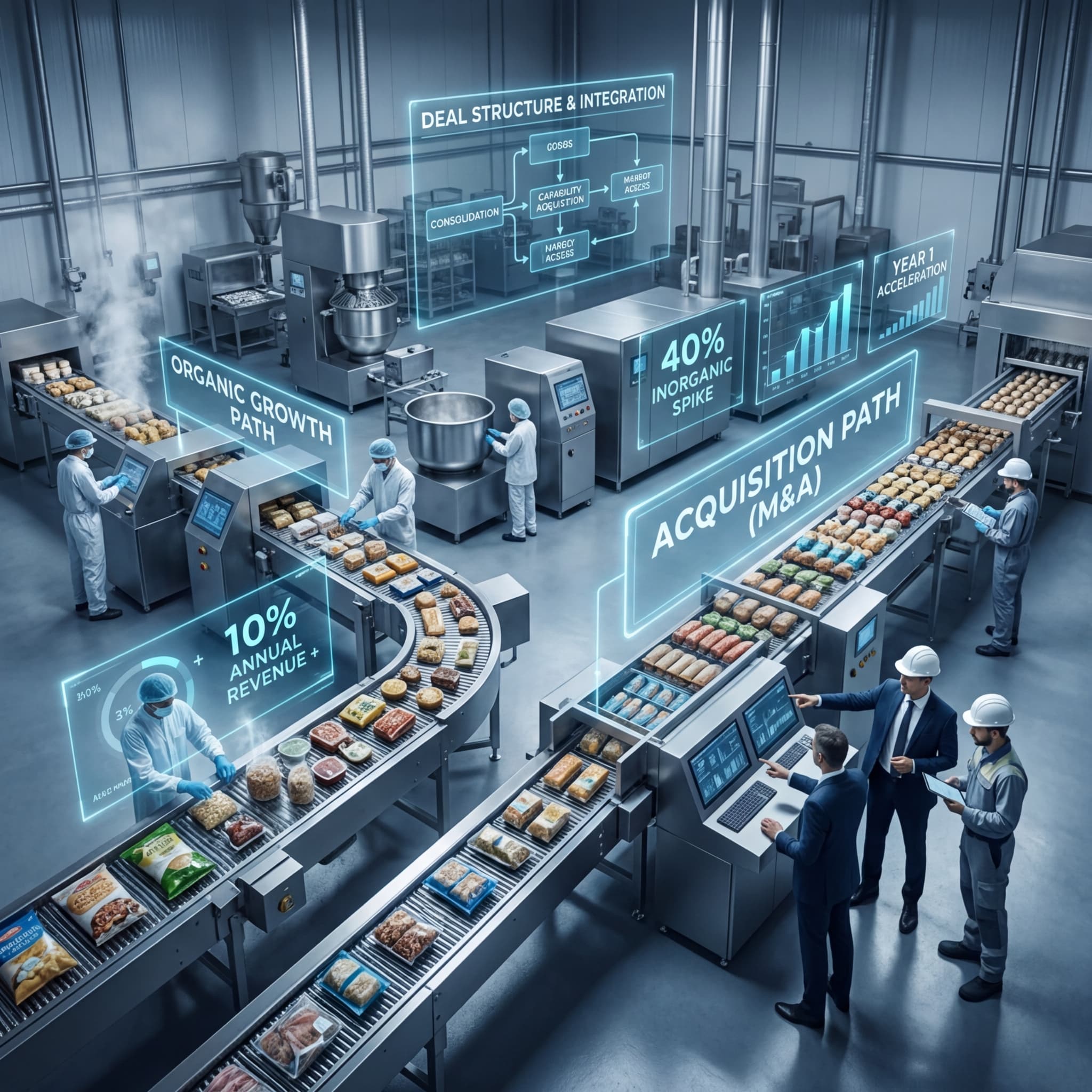
Organic Growth (Internal)
- Product innovation: New flavors, new formats
- Market expansion: New geographies, new customer segments
- Margin improvement: Operational efficiency, pricing optimization
- Typical growth rate: 5-10% annually
Acquisition Growth (Inorganic)
- Acquire competitor or complementary business
- Achieve scale through consolidation
- Typical growth: 20%+ immediately, synergy realization over 2-3 years
Hybrid Growth (Combination)
- Organic base growth: 7% revenue
- Acquisition: $10M revenue business
- Combined: ~20% growth in Year 1
Most food manufacturers use hybrid approach—steady organic growth supplemented by strategic acquisitions.
Setting Realistic Growth Targets
Conservative Scenario (Market Share Gains):
- Market growth: 3% annually
- Market share gains: 1-2% (from competition)
- Organic growth: 4-5% annually
- 5-year revenue: $50M to $63M (26% total growth)
Moderate Scenario (Organic + Acquisition):
- Organic growth: 6% annually
- Acquisition Year 2: $15M revenue business
- Combined: Year 1: 6%, Year 2: 36%, Year 3-5: 8%
- 5-year revenue: $50M to $120M (140% total growth)
Aggressive Scenario (Acquisition-Led):
- Organic growth: 5% annually
- Multiple acquisitions (Years 1-3)
- Combined: 25%+ annually
- 5-year revenue: $50M to $150M+
Critical Success Factors
- Capital Availability: Growth requires investment. Ensure access to capital.
- Talent: Growth ambitions require organizational capability. Build leadership team.
- Operational Capacity: Growing without maintaining quality/customer satisfaction is destructive.
- Market Opportunity: Ensure market demand supports growth targets.
- Competitive Position: Differentiate to justify growth and premium positioning.
For food manufacturing companies, translating vision into specific growth targets and strategic initiatives provides clarity driving organizational focus and resource allocation.