Two food manufacturers in same industry with similar capabilities.
Company A: "Values: Safety, Quality, Integrity." But poor safety record (2 incidents/year), inconsistent quality, ethical lapses.
- Gap between stated and lived values
- Employees cynical about company statements
- Turnover 25% annually
Company B: Stated values aligned to behavior--"Safety First" reflected in actions, quality celebrated, integrity modeled by leadership.
- Values embedded in decision-making
- Employees engaged and proud
- Turnover 8% annually
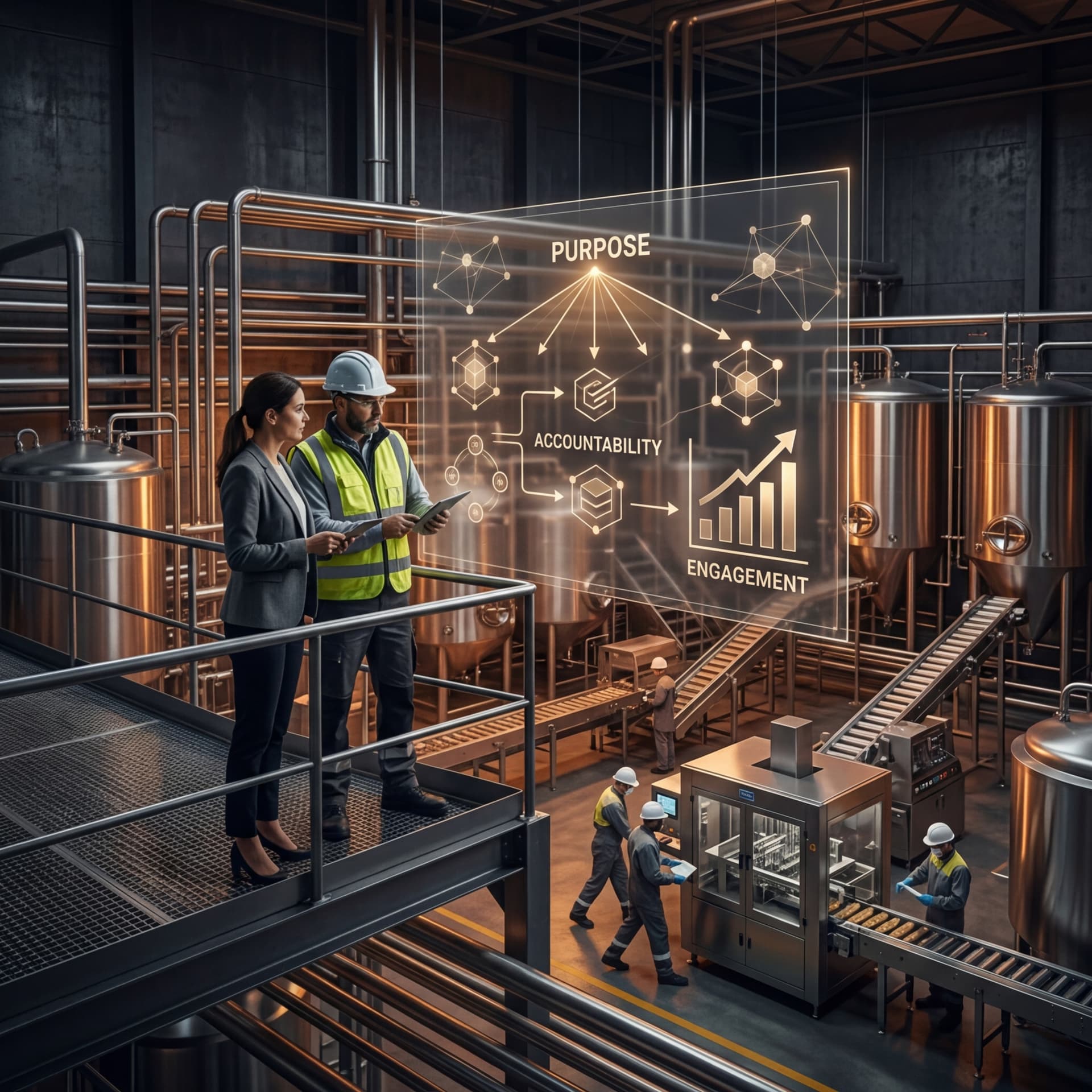
Culture difference drives engagement and performance.
The Culture and Values Framework
Define Core Values:
Values for food manufacturer:
- Safety: Protecting employees, customers, environment
- Quality: Uncompromising product excellence
- Integrity: Doing right thing, transparency, honesty
- Innovation: Continuous improvement, new ideas
- Teamwork: Collaboration, supporting each other
Embed Values in Behavior:
For each value, define observable behaviors:
Safety Value:
- Employees speak up about hazards (vs. hiding)
- Near-miss reporting encouraged (vs. punished)
- Resources allocated to safety (vs. deferred)
- Leadership visible on plant floor
- Zero incidents celebrated
Quality Value:
- "Good enough" never acceptable
- Quality issues escalated quickly
- Root cause analysis systematic
- Customer feedback integrated
- Continuous improvement mindset
Integrity Value:
- Ethical dilemmas discussed openly
- Wrong decisions challenged respectfully
- Whistleblower protection strong
- Leadership walks the talk
- Transparency in communications
Living the Culture
Leadership Modeling:
- CEO visibly living company values
- Executive team aligned on culture
- Difficult decisions made using values as framework
- Recognition for value-aligned behaviors
- Consequences for value violations
Hiring and Onboarding:
- Recruit for values fit, not just skills
- Onboarding reinforces values
- New employees trained on company culture
- Mentorship from value-exemplifying leaders
- Assessment of fit during probation
Performance Management:
- Performance evaluations include values alignment
- Promotion requires values demonstration
- Compensation tied partly to values (not just results)
- Termination possible for values violations (regardless of results)
- Example: High performer who cheats on compliance fired to send message
Recognition and Celebration:
- Monthly recognition for values-aligned behaviors
- Annual awards (safety hero, integrity award, innovation champion)
- Share stories of employees living values
- Celebrate culture milestones
Culture Measurement
Employee Engagement Survey:
- Annual assessment of culture health
- Questions on safety, quality, integrity, innovation, teamwork
- Pulse surveys quarterly (shorter, focused)
- Share results, act on feedback
- Track trends over time
Metrics:
- Safety incidents (target: zero)
- Quality defects (target: under 1%)
- Turnover rate (target: under 10%)
- Ethics violations (target: declining)
- Employee NPS (target: 50+)
Culture Change Process
If culture needs improvement:
Year 1: Define and Communicate
- CEO articulates new values
- Cascade communication to all employees
- Training on expected behaviors
- Symbolic changes (remove contradictions)
Year 2: Reinforce and Model
- Leadership visibly living values
- Recognition for value-aligned behaviors
- Performance management aligned to values
- Consequences for violations
Year 3: Sustain and Embed
- Values part of DNA
- New employees internalize naturally
- Continuous reinforcement
- Long-term culture shift achieved
Culture ROI
Strong values-aligned culture:
- 20-30% improvement in engagement
- 10-15% reduction in turnover
- 5-10% improvement in productivity
- Better quality and safety outcomes
- PE investor views as positive (value creation risk lower)
For food manufacturing companies, strong organizational culture aligned to lived values drives engagement, performance, and sustainable competitive advantage.